Catholicism, Easter, Eucharist, Faith, Good Friday, Gratitude, Holiness, Holy Thursday, Jesus, Lent, Love, Personal Reflection, Prayer, Scripture

These Lavishly Holy Days

The Triduum. My favorite days of the whole year. Holy Thursday has dawned here in Wisconsin with sleet and rain. There’s ice coating the tree branches outside my window. It’ll melt as the rain continues and the temperature rises, but for now, the weather is encouraging me to sit here at my desk with a blanket over my legs and a stack of thoughts to write down.

The first layer in the stack came a week ago, while I knelt in adoration of Jesus during a holy hour at church. There is no quiet so calming as the silent church with Jesus present, where “I look at Him and He looks at me,” as St. John Vianney put it. I opened my Bible to Isaiah, intending to read some familiar encouragement in chapter 55, but instead pausing at chapter 64.

“While you worked awesome deeds we could not hope for, such as had not been heard of from of old. No ear has ever heard, no eye ever seen, any God but you working such deeds for those who wait for him” (Isaiah 64:2-3, NAB).

I held that passage in my heart while I looked upon Jesus, upon God, hanging on a cross over a simple altar. I looked at Him on that little altar, in that mysterious, amazing Eucharist, and the marvelousness of His deeds rushed over my senses.

Look at how you are loved, the Holy Spirit whispered to my heart.

The whisper stayed with me as I went about the rest of my day and the days that followed. Then came Palm Sunday and during Mass my mind caught on one verse after another in the scripture readings of the Mass.

“The Lord God has given me a well-trained tongue, that I might know how to answer the weary a word that will waken them” (Isaiah 50:4, NAB)

“[Christ Jesus], though he was in the form of God, did not regard equality with God something to be grasped. Rather, he emptied himself, taking the form of a slave, coming in human likeness; and found human in appearance, he humbled himself, becoming obedient to death, even death on a cross” (Philippians 2:6-8, NAB).

Then came the Gospel passage. As the whole passion narrative from Matthew was proclaimed, I saw again and again the willingness of Christ. It was there quite plainly in His acceptance of His betrayer amongst His friends, in His passionate prayer in the garden, in His reception of the betrayer’s kiss and the arrest that followed. As the verses continued through Jesus’s testimony before the public and religious authorities, His beatings and abuse, and finally His steps toward the killing place, it was uninterrupted willingness. In our human language, we read of Jesus being led and placed where His enemies wanted Him to go, but all we know of His divinity tells us that no one could have moved Him without Him choosing to move. He allowed those whips to strike Him and that crown of thorns to draw His blood. He submitted to those nails driven through His skin and tissue and bones. Nothing and no one held power over Christ, yet He hung on a cross and surrendered His soul to death.
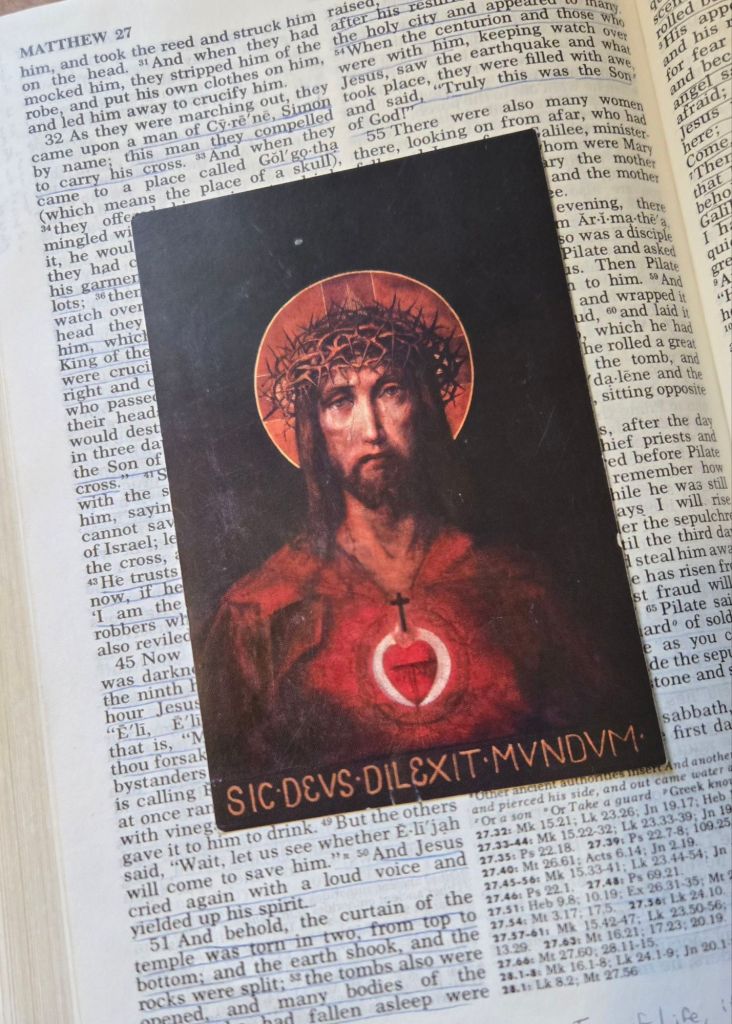
Through each piece of the story, I saw His ready obedience to the Father as a willing sacrificial lamb. When the simplest display of divine authority and power could have silenced every accusation and call for His destruction, He instead moved in humble vulnerability and total submission to the Father’s will.

A willing sacrificial lamb. This is what the Divine Word, by which all creation came to be, chose to become for our sake. From everlasting glory beyond our comprehension, He entered human history as a tiny, vulnerable child. He moved through the world He created as a son, a laborer, a friend, and eventually a teacher and miracle worker who took every step forward within the Father’s will, no matter the cost. In fact, He did all of it because of the cost.

The Sunday liturgy continued and I fought against tears as the images of His sacrifice continued flashing in my mind’s eye. I kept up the fight until I walked forward to receive the Eucharist. I returned to my seat with tears streaming down my cheeks. My shoulders shook a little as I knelt down to give thanks to Him who not only died for me but also gave me His own self to receive at every Mass, fulfilling His startling words in the gospel of John, chapter 6. It struck me deep in my heart that Jesus never stops offering Himself to us in the most humble and vulnerable ways. It is such a beautiful love by which He loves us, isn’t it?

After Mass, I wasn’t ready to leave. I knelt down again and prayed a Divine Mercy chaplet. While I meditated on Christ’s sacrifice, words from St. John came forth.

“See what great love the Father has lavished on us, that we should be called the children of God” (1 John 3:1a, NIV).

It was that particular translation of the verse that danced through my thoughts as I prayed. Lavish is an excellent word. Its synonyms include unrestrained, extravagant, and excessive. The lavishness of God’s love is worthy of awe and our own full submission to His perfect will. The lavishness of Christ’s sacrifice is worthy of humble but abundant thanksgiving on our part. And the lavishness of God’s grace flowing through the sacraments is an unrestrained, extravagant, excessive source of life for all who receive it.

As we embark on the holiest days of the year, I pray that all remnants of hesitation or indifference will fall away from our souls to be replaced with faith, gratitude, and a joyful, loving obedience to the Father, the Son, and the Holy Spirit.
Catholicism, Faith, Jesus, Lent, Prayer, Scripture

Dust and Ashes

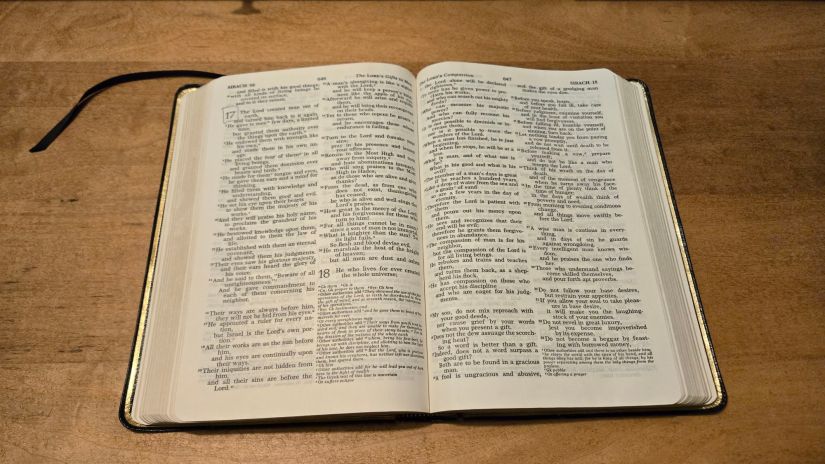
I woke early on Wednesday and sat down at this same writing desk. I laid my Bible on the wood surface and let it fall open without a particular book, chapter, or verse in mind. The pages spread at Sirach 17. I had penned a circle around the chapter number at some point in the past and since I couldn’t recall the contents of it, I read it through with fresh eyes. God bookended my day-the first day of Lent, Ash Wednesday-with “the Lord created man out of earth, and turned him back to it again” (Sirach 17:1) in the morning, and in the evening, ashes pressed in a cross on my forehead accompanied by “remember you are dust and unto dust you shall return.” Sometimes the Lord speaks more clearly than others.

The first fourteen verses I read through twice, and was tempted to stop there. There’s a comforting reassurance in any description of the Creator’s graciousness toward us His creatures. These verses are no exception and yes, it’d feel lovely to stop there with recounting God’s creation of mankind, a marvel made from the dirt, and His gifts to us. Life, time, authority over His created world, strength like His, and made in His very own perfect image.

There is fine fruit to be born of humble, grateful acknowledgement of how He equipped His highest creatures. We have a tongue for truth and eyes to see all He sets before us, ears to hear and a mind to think. He fills us, not merely gives us a taste but fills us with knowledge and understanding. He shows us good and evil, then places His own vision within our hearts so we might see the glory in all His works.

Couldn’t we call it enough to speak of the resulting praise and proclamation of His marvelous works, and the eternal covenant between Him and His people? I wanted to stay there, where our eyes behold His glory and our ears are filled with the beautiful voice of our God.

The story would be easier if it ended there. Simpler and easier. Freedom does not bear easy fruit though. And God wants nothing less than our hearts freely given. He gave us all we need in His magnificent design and creation, and in the equipment of His image carried in our very selves. He desires our good alone. He wants our good more than we want it for ourselves, to be sure, and this is what causes the story to move on from the comfort of the creator to the need and response of a savior.

Our eyes wander from that “glorious majesty” (v. 13) and we tune out His melodious voice for the sake of lesser sounds. The verses of Sirach 17 shift to the second stage of our collective story where our loving God’s eyes never move from us, every action laid before Him, our sins “not hidden from Him” (v. 20). How often we live as if we are capable of keeping secrets from Him. Is it our brokenness that is primary in His view though? It would be justice for that to be the case. But no, He notes our good gifts and our kindness to our neighbors is “the apple of His eye.”

Brokenness is not our finished state. Brokenness becomes the context, the circumstances made by our sins, where we receive the same love with which God created us in the first place. For even as He keeps His eyes on us and all we do, and sees the just recompense our sins deserve, there is never a pause in His mercy. It is His most generous attribute. “To those who repent He grants return, and He encourages those whose endurance is failing” (v. 24).

In the face of such unrelenting mercy, “turn to the Lord and forsake your sins” (v. 25a).

In the broken moments, “pray in His presence and lessen your offenses” (v. 25b).

When your way has led you into darkness, “return to the Most High and turn away from iniquity” (v. 26a).

When the Spirit opens your eyes to sin in and around you, and it cannot be unseen, “hate abominations intensely” (v. 26b).

Praise and thanksgiving cease in the souls who reject divine mercy unto death. These dead cannot sing any longer. Do not live as if already dead. Sing within your soul and with your words and deeds. “How great is the mercy of the Lord, and his forgiveness for those who turn to him! He marshals the host of the height of heaven; but all men are dust and ashes” (vv. 29, 32). Glory to Him who created us due to love and saves us with the same.

Catholicism, Faith, Hope, Jesus, Personal Reflection, Prayer, Saints, Scripture

The Heart of Jesus – Pt 2

Thirty minutes ago, I decided to do a little writing. My ancient laptop takes several minutes to turn on and load up before I can open the browser, then another few minutes to load the website and move from link to link to reach this page where I can type up this post. So, I pressed the power button and walked away to retrieve my notebook from downstairs. As I reached the living room, I figured I had plenty of time to finish putting away the clean dishes which for some reason I’d only halfway done before my shower. In putting said dishes in their cupboard homes, I noticed how badly the trays in the silverware drawer needed to be washed. So I emptied those trays, made some soapy water in the sink, and washed them up. Next, I thought I really should comb out my hair since it was wrapped in a towel atop my head. My hair combed, I remembered my notebook still stowed in a bag in the living room. Reaching that room yet again, I noticed how hungry I felt as the noon hour approached. I thought I ought to have a snack or I’d end up with a headache as I so often do. Selecting something from the pantry, I headed back upstairs and promptly remembered my notebook again.

Now, here I sit. My dishes put away, silverware trays washed, hair combed, a bag of trail mix sitting beside that finally retrieved notebook, and my brain scrambling to recall the thoughts that prompted me to write in the first place.

Oh, how the fallenness inside me feeds on distraction. How busy the enemy of our souls prefers to keep us. I had a single thought on the goodness of the heart of God, followed by a thought of sharing that truth with you, and that enemy knew exactly what to do. Distract! Detour! Show her all the lesser matters that could have her attention, and convince her they deserve to have it!

No thanks to me and all thanks to the Holy Spirit, I do remember what prompted the urge to write though. It was a compilation of thoughts that have accumulated for three months now. Ever since the church’s celebration of the Sacred Heart of Jesus in late June, I keep returning to these matters. On that mid-summer morning, I sat down to read the scripture passages for Mass and found myself surprised and a little perplexed. I expected straightforward verses on the love of God, or perhaps on the nature of love itself.

God is love. Love is patient. Love is kind. Faith, hope, and love remain, and the greatest of these is love. For God so loved the world that He gave His only Son. All of these seemed obvious choices for the day’s readings. Instead I found a theme I did not predict: the Good Shepherd.

The first reading was from Ezekiel 34. While I have long been familiar with and fond of the Gospel passages about Jesus as the Good Shepherd, I tend to forget that His claim on that title was a direct fulfillment of God’s portrayal of Himself in the Old Testament. It is a portrayal of both tenderness and leadership.

I myself will look after and tend my sheep…. I will rescue them from every place where they were scattered when it was cloudy and dark…. I will lead them…. I will bring them back… and pasture them…. I myself will give them rest, says the Lord God. The lost I will seek out, the strayed I will bring back, the injured I will bind up, the sick I will heal, but the sleek and the strong I will destroy, shepherding them rightly (Ezekiel 34:11-16, edited).

This is not a distant, aloof God. This is a dedicated, leading, determined, caring God. And this is the same God who spoke in that day’s gospel passage, inviting the citizens of heaven to rejoice with Him over the repentance and restoration of a single one of His beloved flock (Luke 15:6-7).

The Sacred Heart of Jesus, the seat of His love and mercy, is the heart of a shepherd – of the Good Shepherd.

A couple weeks ago, we celebrated a beloved saint, St. Pio of Pietrelcina, mostly known as Padre Pio. He spoke countless wise words in his lifetime and one of my favorite quotes is a favorite of many: “Pray, hope, and don’t worry. Worry is useless. Our merciful Lord will listen to your prayer.” I imagine that if Padre Pio shared such advice with any of the men and women who sat before him during the up to 10 hours of daily confessions he used to hear, many of them would have asked ” how?” How do we not worry? How is that possible?

When I asked that question myself in prayer, the Spirit whispered immediately, “Because you are cared for by a shepherd with a perfect heart of love.”

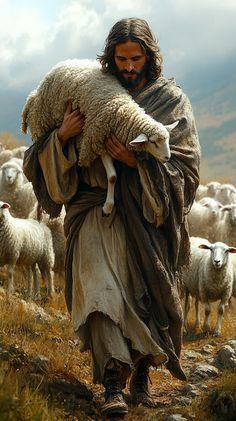
A shepherd does not let his sheep wander where harm awaits them. He provides boundaries that do not restrict but rather clarify where they are provided for and safe. When his sheep do stray, he does not write them off and abandon them. He seeks them out. He combats the peril they’ve walked into and restores them to where they belong. The shepherd keeps watch. The sheep do not need to worry. They need only remain in the presence of their shepherd.

Do not worry. The One who watches over you never sleeps. (Psalm 121:3-4) Do not be afraid. The Lord who loves you is your rock, fortress, refuge, and shield. (Psalm 18:2) Cast aside anxiety and undue stress. He leads you to rest and restoration. (Psalm 23:2-3)

Do not worry. You are loved and led by the Good Shepherd.

Catholicism, Faith, Good Friday, Holiness, Hope, Jesus, Lent, Personal Reflection, Prayer, Scripture

The Good of That Friday

My sins are nailed on the cross with my Jesus.

My mistakes.

My failures.

My shortcomings.

My selfishness.

My self-loathing.

My rejections.

My punishments.

My shame.

They are nailed to the cross in the hands of Jesus and thus I can no longer hold them in mine.

With the repentant criminal beside him, I plead “Jesus, remember me when you come into your kingdom,” and he assures me that he does. He remembers me. He remembers the me known by the Father even before I was formed in my mother’s womb, stripped of the sins that mar that creation. With his arms spread on the bloody cross, he moves my sin and shame away from me, as far as east is from west.

This is the redemption of Christ. This is the good of that incredible, unmerited Friday.

Catholicism, Easter, Eucharist, Faith, Holiness, Holy Thursday, Jesus, Lent, Prayer, Scripture

To Whom Shall We Go – Holy Thursday Reflection

Jesus said to the twelve, “Will you also go away?

Simon Peter answered him, “Lord, to whom shall we go? You have the words of eternal life; and we have believed, and have come to know, that you are the Holy One of God.”

John 6:67-69

Simon Peter’s statement of commitment and faith comes after Jesus’s bewildering explanation of his being the Bread of Life. Surrounded by a crowd that followed him across a sea to continue hearing him teach and to witness his miracles, Jesus boldly declared that he is “the true bread from heaven,” “the living bread,” and “if anyone eats of this bread, he will live forever.”

As the verses pile up through John, chapter six, we hear these incredible words from Jesus and the unsurprising objections of his listeners. With each murmured doubt from the crowd, Jesus deepens his teaching. He reinforces it and makes no move to backpedal or soften the truth he is delivering to them – and to us.

Jesus is “the bread of life,” “true food” and “true drink” to be consumed by those who believe he is the way to eternal life. He is the fulfillment of every sacrifice and ceremonial meal of the Old Testament. He is the manna sent by the Father to feed God’s people, not for a day but for eternity.

When he finishes this discourse, the response that rose above the noise was, “This is a hard saying; who can listen to it?”

Isn’t that the question for me? For us?

It is the question that comes with the real presence of Christ in the Eucharist, and the necessity of that miraculous and baffling sacrament.

Just the same, the question accompanies every “hard saying” in the moral teachings of Christ and his church. It is heard behind the disciplines and virtues within the call to imitate Christ, which often fly in the face of what is deemed acceptable or good by the rest of society. From the unflinching declaration of Jesus that he is the way, the truth, and the life, the question comes in the appeal of the wide array of other ways, partial truths, and opposing lives I could live.

Who can listen to it? Who can accept it? Who can live it? The question arises from the voices around me and from deep within my own soul. I hear it echoing through times of suffering and confusion. When I don’t understand where to find God or what he is doing, it is heard above the noise.

“This is a hard saying; who can listen to it?”

Like the followers then, I, his follower now, can respond as many did when they “drew back and no longer went about with him.” Or I can speak in harmony with Peter – with imperfect yet wholehearted faith.

I can walk with Jesus with questions on my tongue, and still thoroughly convinced by all I do know and all I have seen and heard. I can trust that greater insight will come further down the road, just as it did for the disciples when the earlier words of Jesus replayed in their ears as he lifted the bread and wine at the Last Supper: “Take, eat; this is my body…. Drink of it, all of you; for this is my blood of the covenant, which is poured out for the forgiveness of sins” (Matthew 26:26b, 27b-28).

It is from this place of faith and trust that I gaze at the body of my Lord on the Cross and in the Eucharist. With that gaze comes a swell of love, awe, and peace. With that gaze, my soul sees its savior and answers, “Lord, to whom shall we go? You have the words of eternal life; and we have believed and come to know, that you are the Holy One of God.”

Advent, Christmas, Faith, Jesus, Prayer, Scripture

Heaven Celebrated – Christmas Reflection

And suddenly there was a multitude of heavenly host with the angel, praising God and saying: “Glory to God in the highest and on earth peace to those on whom his favor rests.”

Luke 2:13-14, NAB

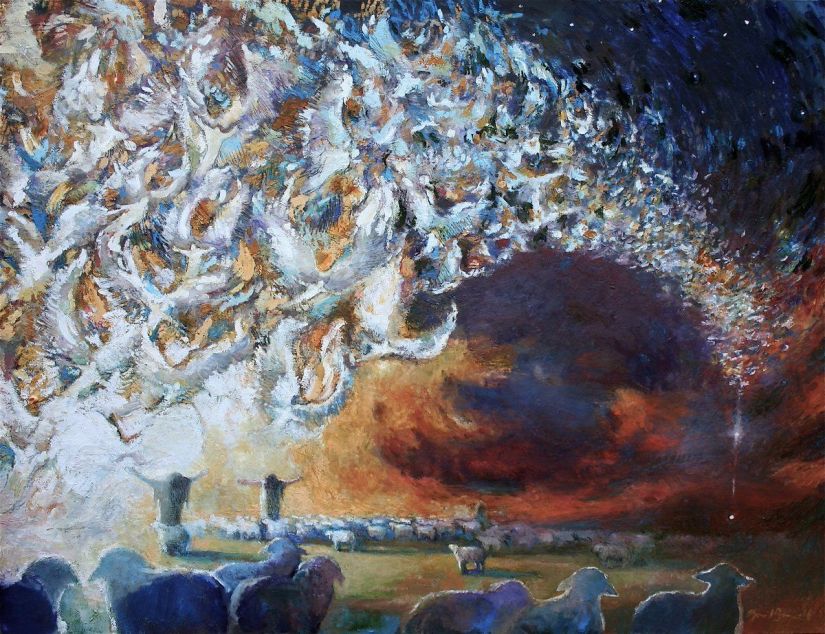
This scene of the Christmas Story, with the shepherds under dark skies and the angels that appear in heavenly light, is a favorite to picture in my mind. It is second only to imagining the Holy Family in the minutes after Jesus’s birth. I had a difficult time choosing an image to add here but eventually came across this stunning painting by Daniel Bonnell and it is the closest I’ve seen an artwork come to matching my imagination’s recreation of the scene.

It’s just that in my head, I imagine so many angels. I see them packed into the patch of sky arching over the shepherds. I see a tremendous amount of glowing white and gold light surrounding, filling, and beaming from the angels.

In that sky, over those fields, is where we see the glory.

Jesus came without fanfare, but the Father lit the sky with the heavenly glory the Son left behind for Bethlehem.

A multitude of host! Angels uncountable. A host is a multitude in itself. The first angel’s message of the good news of the savior was heralded by a multitude of multitudes of angels. The Son of God was born to Mary and heaven celebrated. Heaven rejoiced. The angels spilled through the divine realm and into our sky. They came with light and joy and song.

My Christmas prayer is that I and every one of you will know the joy of the angels in the celebration of Christ our Lord. We reach this day in such varied circumstances, from the good and beautiful to the painful and discouraging. In every case, may His glorious light crack across darkness and magnify what already shines.

Merry Christmas.

Author’s Note:

It’s been a substantial blessing to spend Advent with you. Thank you for joining me. This reflection series is the first consistent writing I have done in 3 years. The Lord is faithful and I rejoice in Him.

Advent, Catholicism, Christmas, Faith, Hope, Jesus, Love, Prayer, Scripture

Nothing Will Be Impossible – Advent Reflection, December 24th

Week 4, Sunday – December 24th

For nothing will be impossible for God.

Luke 1:37

With God, it is possible. These words from the archangel Gabriel are the only ones he needed to speak when Mary asked, “how can this be?”

Gabriel explained some things first, helping Mary to understand and thus helping us many generations later. He gave Mary insight into how she would bear the Son of God. He went on to offer a bit of supporting evidence in Elizabeth’s pregnancy, which Mary could confirm for herself and thus build her confidence in the angel’s message. Yet it is only his final words to her that answered the question of how these things could occur.

“For nothing will be impossible for God.” This alone elicits Mary’s fiat, her yes to God’s invitation to take up her incredible and unique role in humanity’s salvation. It is likewise the only truth necessary to elicit my own fiat.

To whatever God asks of me; to what work of His hands He calls me to participate in; to whom He asks me to serve; my yes arises from knowing that nothing is impossible for Him. I am not asked to do any of it on my own abilities and strength alone. I am invited to count on Him.

Hardships. Hurt. Illness. Grief. Trauma. Every single cross I am invited to carry in my following of Him. No less, the joys and successes; the opportunities, adventures, and marvelous blessings as I walk with Him. Every single one can be taken up with the hopeful cry, “Nothing is impossible for You, Lord!”

In all things requiring faith, my faith must stand upon two simultaneous truths: nothing is impossible for God, and God is love. In these I know and believe that God is capable of accomplishing what He sets out to do – no matter how impossible it may seem to me – and that what He sets out to do is always for my greatest good.

Is there any finer example of these great truths than the Incarnation? God becoming man in the humblest manner. God coming to live with us, serve our punishment of death, and defeat its hold on our souls. God opening the gates of heaven to every person who chooses to follow and believe. It is a most impossible plan, absurdly defying human logic and wisdom. Yet He does it, and He does it all for love of us.

With God, it is all possible. With God. it is all love.