Catholicism, Easter, Eucharist, Faith, Good Friday, Gratitude, Holiness, Holy Thursday, Jesus, Lent, Love, Personal Reflection, Prayer, Scripture

These Lavishly Holy Days

The Triduum. My favorite days of the whole year. Holy Thursday has dawned here in Wisconsin with sleet and rain. There’s ice coating the tree branches outside my window. It’ll melt as the rain continues and the temperature rises, but for now, the weather is encouraging me to sit here at my desk with a blanket over my legs and a stack of thoughts to write down.

The first layer in the stack came a week ago, while I knelt in adoration of Jesus during a holy hour at church. There is no quiet so calming as the silent church with Jesus present, where “I look at Him and He looks at me,” as St. John Vianney put it. I opened my Bible to Isaiah, intending to read some familiar encouragement in chapter 55, but instead pausing at chapter 64.

“While you worked awesome deeds we could not hope for, such as had not been heard of from of old. No ear has ever heard, no eye ever seen, any God but you working such deeds for those who wait for him” (Isaiah 64:2-3, NAB).

I held that passage in my heart while I looked upon Jesus, upon God, hanging on a cross over a simple altar. I looked at Him on that little altar, in that mysterious, amazing Eucharist, and the marvelousness of His deeds rushed over my senses.

Look at how you are loved, the Holy Spirit whispered to my heart.

The whisper stayed with me as I went about the rest of my day and the days that followed. Then came Palm Sunday and during Mass my mind caught on one verse after another in the scripture readings of the Mass.

“The Lord God has given me a well-trained tongue, that I might know how to answer the weary a word that will waken them” (Isaiah 50:4, NAB)

“[Christ Jesus], though he was in the form of God, did not regard equality with God something to be grasped. Rather, he emptied himself, taking the form of a slave, coming in human likeness; and found human in appearance, he humbled himself, becoming obedient to death, even death on a cross” (Philippians 2:6-8, NAB).

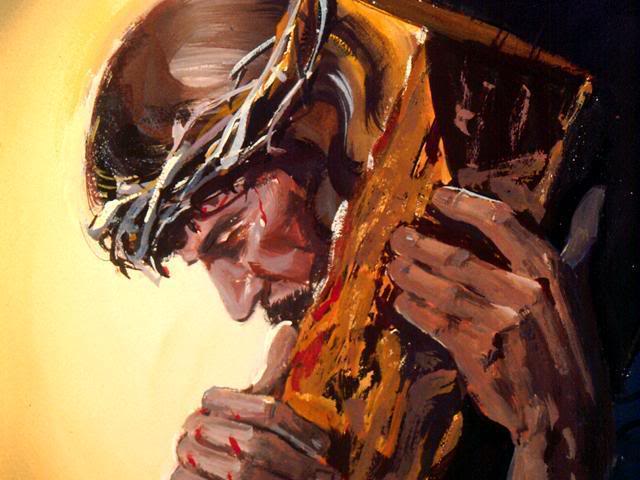
Then came the Gospel passage. As the whole passion narrative from Matthew was proclaimed, I saw again and again the willingness of Christ. It was there quite plainly in His acceptance of His betrayer amongst His friends, in His passionate prayer in the garden, in His reception of the betrayer’s kiss and the arrest that followed. As the verses continued through Jesus’s testimony before the public and religious authorities, His beatings and abuse, and finally His steps toward the killing place, it was uninterrupted willingness. In our human language, we read of Jesus being led and placed where His enemies wanted Him to go, but all we know of His divinity tells us that no one could have moved Him without Him choosing to move. He allowed those whips to strike Him and that crown of thorns to draw His blood. He submitted to those nails driven through His skin and tissue and bones. Nothing and no one held power over Christ, yet He hung on a cross and surrendered His soul to death.
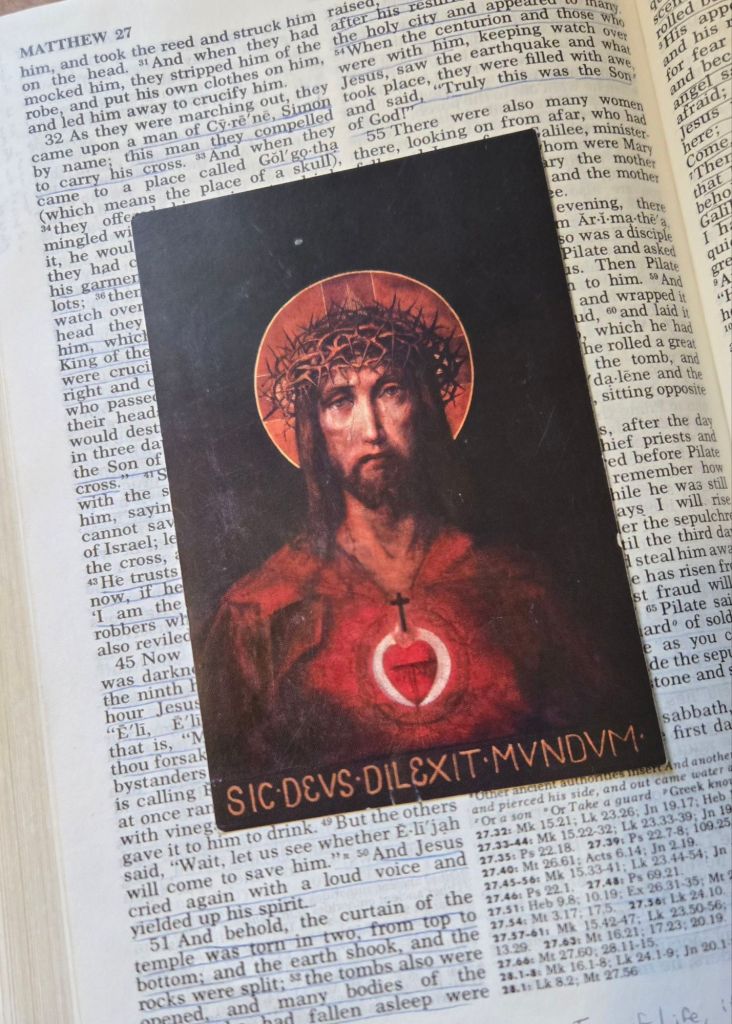
Through each piece of the story, I saw His ready obedience to the Father as a willing sacrificial lamb. When the simplest display of divine authority and power could have silenced every accusation and call for His destruction, He instead moved in humble vulnerability and total submission to the Father’s will.

A willing sacrificial lamb. This is what the Divine Word, by which all creation came to be, chose to become for our sake. From everlasting glory beyond our comprehension, He entered human history as a tiny, vulnerable child. He moved through the world He created as a son, a laborer, a friend, and eventually a teacher and miracle worker who took every step forward within the Father’s will, no matter the cost. In fact, He did all of it because of the cost.

The Sunday liturgy continued and I fought against tears as the images of His sacrifice continued flashing in my mind’s eye. I kept up the fight until I walked forward to receive the Eucharist. I returned to my seat with tears streaming down my cheeks. My shoulders shook a little as I knelt down to give thanks to Him who not only died for me but also gave me His own self to receive at every Mass, fulfilling His startling words in the gospel of John, chapter 6. It struck me deep in my heart that Jesus never stops offering Himself to us in the most humble and vulnerable ways. It is such a beautiful love by which He loves us, isn’t it?

After Mass, I wasn’t ready to leave. I knelt down again and prayed a Divine Mercy chaplet. While I meditated on Christ’s sacrifice, words from St. John came forth.

“See what great love the Father has lavished on us, that we should be called the children of God” (1 John 3:1a, NIV).

It was that particular translation of the verse that danced through my thoughts as I prayed. Lavish is an excellent word. Its synonyms include unrestrained, extravagant, and excessive. The lavishness of God’s love is worthy of awe and our own full submission to His perfect will. The lavishness of Christ’s sacrifice is worthy of humble but abundant thanksgiving on our part. And the lavishness of God’s grace flowing through the sacraments is an unrestrained, extravagant, excessive source of life for all who receive it.

As we embark on the holiest days of the year, I pray that all remnants of hesitation or indifference will fall away from our souls to be replaced with faith, gratitude, and a joyful, loving obedience to the Father, the Son, and the Holy Spirit.

Catholicism, Easter, Eucharist, Faith, Holiness, Holy Thursday, Jesus, Lent, Prayer, Scripture

To Whom Shall We Go – Holy Thursday Reflection

Jesus said to the twelve, “Will you also go away?

Simon Peter answered him, “Lord, to whom shall we go? You have the words of eternal life; and we have believed, and have come to know, that you are the Holy One of God.”

John 6:67-69

Simon Peter’s statement of commitment and faith comes after Jesus’s bewildering explanation of his being the Bread of Life. Surrounded by a crowd that followed him across a sea to continue hearing him teach and to witness his miracles, Jesus boldly declared that he is “the true bread from heaven,” “the living bread,” and “if anyone eats of this bread, he will live forever.”

As the verses pile up through John, chapter six, we hear these incredible words from Jesus and the unsurprising objections of his listeners. With each murmured doubt from the crowd, Jesus deepens his teaching. He reinforces it and makes no move to backpedal or soften the truth he is delivering to them – and to us.

Jesus is “the bread of life,” “true food” and “true drink” to be consumed by those who believe he is the way to eternal life. He is the fulfillment of every sacrifice and ceremonial meal of the Old Testament. He is the manna sent by the Father to feed God’s people, not for a day but for eternity.

When he finishes this discourse, the response that rose above the noise was, “This is a hard saying; who can listen to it?”

Isn’t that the question for me? For us?

It is the question that comes with the real presence of Christ in the Eucharist, and the necessity of that miraculous and baffling sacrament.

Just the same, the question accompanies every “hard saying” in the moral teachings of Christ and his church. It is heard behind the disciplines and virtues within the call to imitate Christ, which often fly in the face of what is deemed acceptable or good by the rest of society. From the unflinching declaration of Jesus that he is the way, the truth, and the life, the question comes in the appeal of the wide array of other ways, partial truths, and opposing lives I could live.

Who can listen to it? Who can accept it? Who can live it? The question arises from the voices around me and from deep within my own soul. I hear it echoing through times of suffering and confusion. When I don’t understand where to find God or what he is doing, it is heard above the noise.

“This is a hard saying; who can listen to it?”

Like the followers then, I, his follower now, can respond as many did when they “drew back and no longer went about with him.” Or I can speak in harmony with Peter – with imperfect yet wholehearted faith.

I can walk with Jesus with questions on my tongue, and still thoroughly convinced by all I do know and all I have seen and heard. I can trust that greater insight will come further down the road, just as it did for the disciples when the earlier words of Jesus replayed in their ears as he lifted the bread and wine at the Last Supper: “Take, eat; this is my body…. Drink of it, all of you; for this is my blood of the covenant, which is poured out for the forgiveness of sins” (Matthew 26:26b, 27b-28).

It is from this place of faith and trust that I gaze at the body of my Lord on the Cross and in the Eucharist. With that gaze comes a swell of love, awe, and peace. With that gaze, my soul sees its savior and answers, “Lord, to whom shall we go? You have the words of eternal life; and we have believed and come to know, that you are the Holy One of God.”

Easter, Family, Gratitude, Midwest, Motherhood, Personal Reflection

Home Again

IMG_20190425_142050_875.jpgThis is home. Where I spent my first 18 years. Where I fumbled my way through childhood and teenage ups and downs. Where I witnessed my six older siblings leading the way. Where my parents still reside, ready to feed us, talk Jesus, and start a 1000 piece puzzle any time we’re inclined. I treasure any opportunity to bring my children there so they can stockpile experiences and memories of the place. I’m well aware the opportunities will run out one day. I prefer not to think on that except to let it remind me of the value of those visits.
The kids ask multiple times a week when we’ll return. Well, not so much when we will return. They love more than anything to stay with Grandma and Papa on their own, without me or their dad. And I love allowing them to do so. I love their independence. I love their complete confidence that they will be happy and safe and cared for while they are with their grandparents. I frequently wish that my husband’s parents lived within a few hours drive too, so the kids could be collecting similar experiences with them.

We spent Easter Sunday at my parents’ home and the day was everything beautiful. It began with Mass at my childhood parish. Afterward, I cooked with my mom to serve a delicious dinner at the table that has gathered up our family and friends for countless meals. (Seriously, I didn’t want to stop eating. It was so good.) Then we spent a while soaking in the springtime sunshine.

20190421_144058.jpg

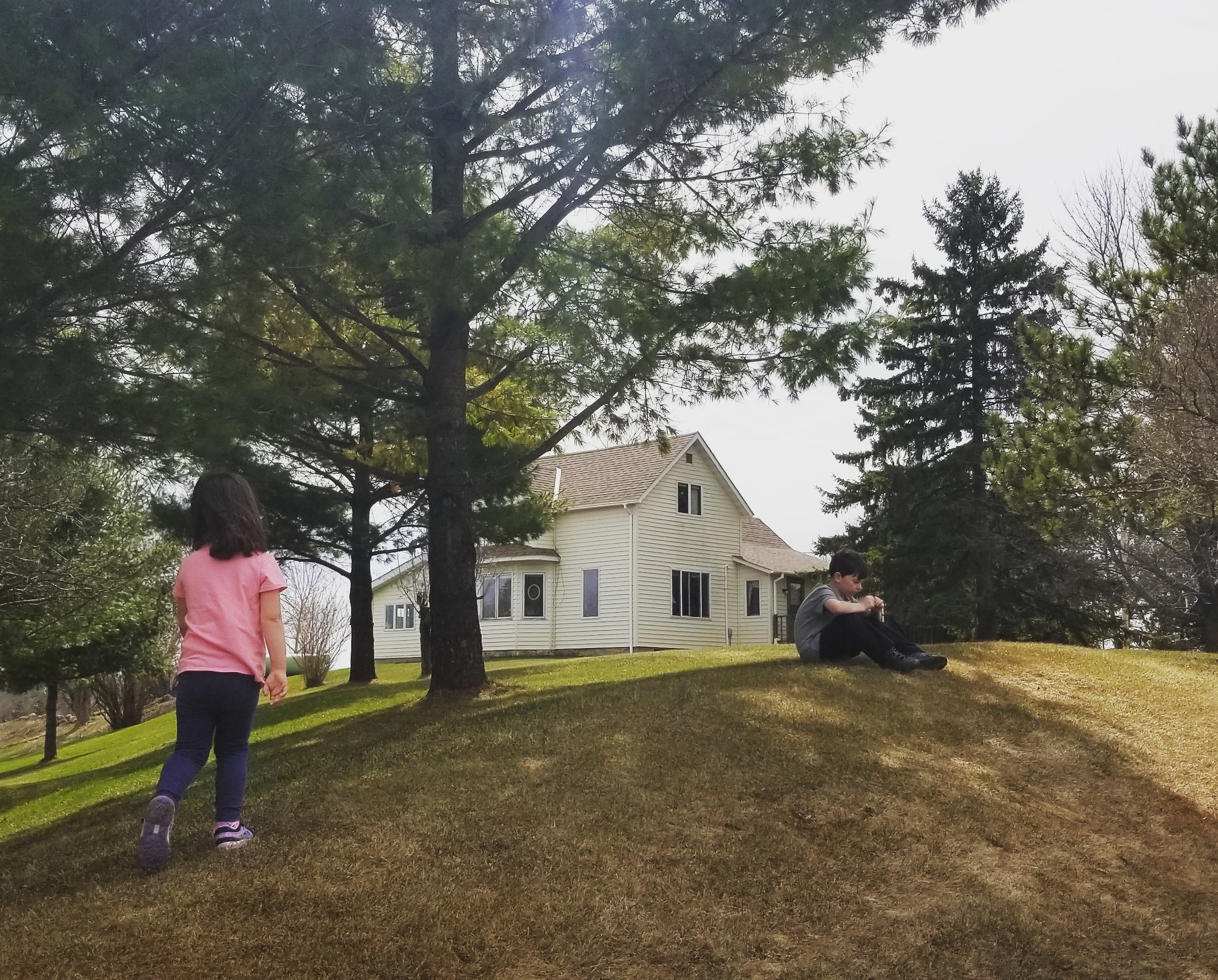
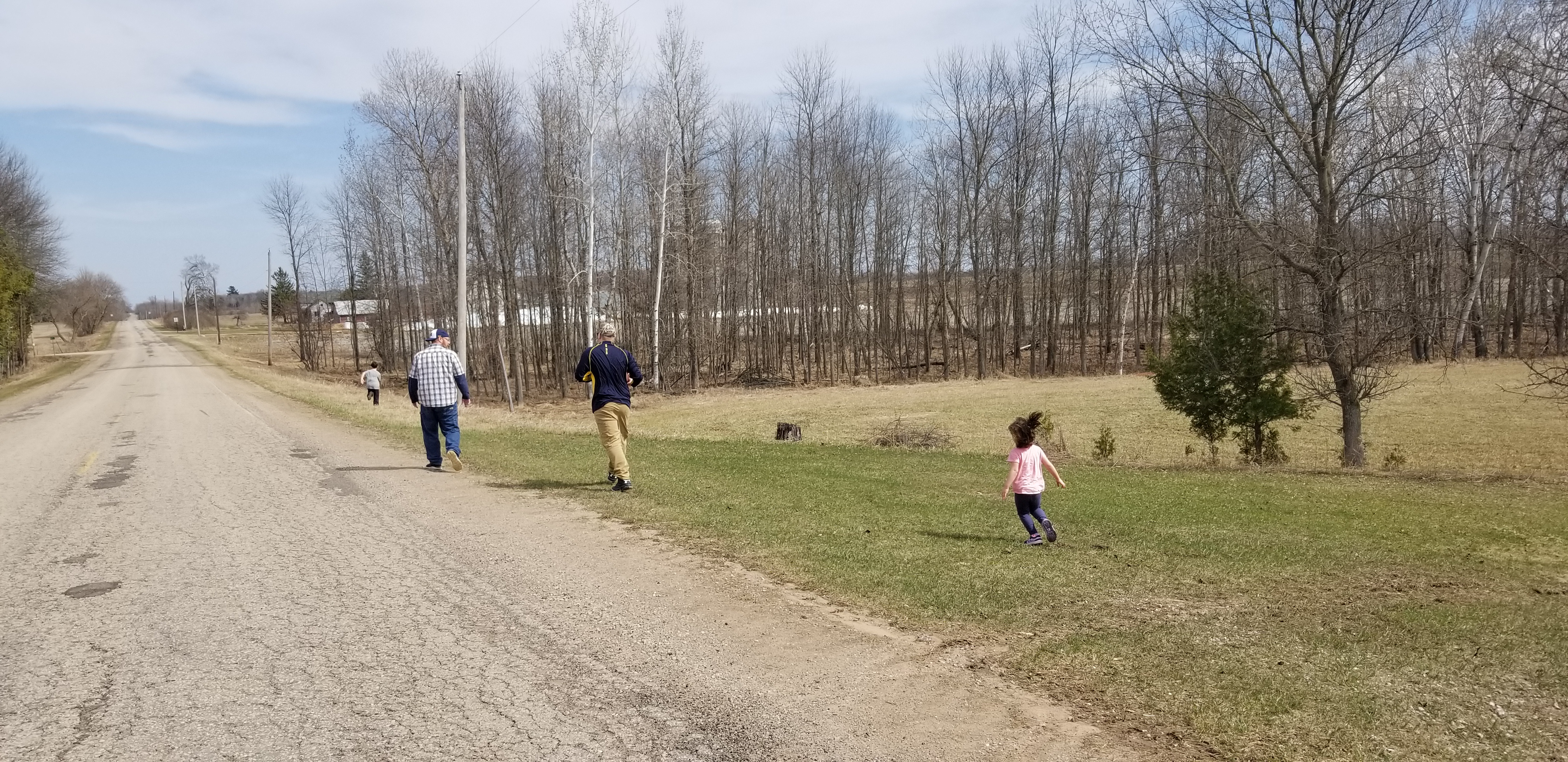
My fifteen-year-old stepson, who lives with his mother in a neighboring town, joined us for the afternoon too. Any chance to see the younger two excitedly enjoy time with their older brother is a heart-strengthening treat. Our family of five plus my father walked down the one road that I know better than any other road on this earth. We marveled at how high the creek is now that the snow has melted. We visited my grandparents’ former farm with its collapsing old barns. Lastly, we lingered at the pond, throwing rocks to splash in the water while I remembered all the summer afternoons spent wandering there and the winter days of ice skating on its hardened surface. It was one of those days when I couldn’t overlook my blessings even if I tried.

My people will live in peaceful country, in secure dwellings and quiet resting places. Isaiah 32:18

Catholicism, Easter, Faith, Intentionality, Scripture

Missing Your Chance… Or Not

I have a vivid memory of sitting on my sister’s living room floor watching her open her birthday gifts. One from me was a bookmark with a George Eliot quote that read, “It is never too late to be what you might have been.” She unwrapped and read it then looked at me with wet eyes and asked, “Do you really believe that?” I nodded. She was in her early thirties and was at the start of a remarkable overhaul of her life. She was among the first people to convince me that there is never a good excuse to believe you’ve missed your chance to be who you long to be.

Which brings me to Easter. I intended to write a blog for Easter. A few non-coalesced themes floated around my mind. I even told myself it’d be best to write it early and schedule it to post on Easter. Hours and days passed and then the chance was gone. It was Monday and Tuesday and Wednesday and now, here I am talking about my unfulfilled intentions.

And it is still Easter.

In the faith I practice and believe in wholeheartedly, we celebrate Easter for a full season. This season happens to be fifty days. Fifty days of joy, of a special call to gratitude for the gift of salvation, and of reflecting inwardly on the great miracle of Easter.

The memory of my sister and the reality that I missed my chance yet didn’t miss my chance to write something for you all for Easter has me boarding a train of thought I’ll ask you to ride with me. Here it is: could anything possibly be more appropriate to Easter than to consider how what we might assume is missed or finished is far from being so?

An arrest and beating; a turning of the tide of popularity and acceptance; a crucifixion and a grave: all indeed appeared finished.

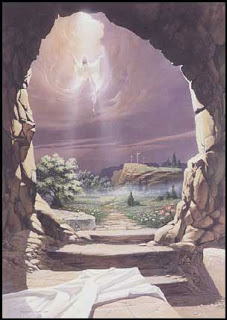
We forget that our knowledge is partial. We cannot see the full picture or understand the complete, intricate plan. We forget that the shocking empty grave and mystical appearance of the resurrected Christ was not a shock to the One who orchestrated it all. If Easter is teaching me a particular lesson this year it is to never assume that the chance has come and gone to be who I am meant to be and live as I am called to live. The dream, the goal, the change: whatever it might be that you have resigned to past opportunities and assumed must be let go, think again.

The Father above ordained the day of your beginning. Do not concern yourself with identifying endings along the way, or even the final ending He also ordains (which even then will not be a true ending, if grace allows). He gives us our chances in abundance. Some we squander and some we take. Forgive yourself the former and be encouraged by the latter. Then start taking more and squandering less, and leave the rest to God.

Catholicism, Easter, Faith, Holiness, Jesus, Lent

We Are the Cross

We are the cross. The cross that was laid on Jesus’ back and dug into his flesh as he carried it through the streets; the cross that he held onto, bearing it past the taunting crowds and whipping soldiers; we are that cross. The fibers of the wood consist of our sins, our rejections of truth and goodness. It is made up of us, in all our weaknesses and shortcomings. Jesus bears us, lifting us on his beaten shoulders to bring us to the place of salvation.

We are the cross. The cross to which Jesus was willingly nailed; the cross which he accepted in unconditional love; the cross on which he bled; we are that cross. He united himself to us irrevocably. His mercy is scarred into his hands and feet, His blood covers us as it did the wood of that cross: seeping into it and becoming part of it. We are indelibly marked by his redeeming blood.

We are the cross. The cross that was the source of his suffering yet became his throne; the cross that appeared to shame him yet brought glory; we are that cross. He is enthroned in our hearts. He resides in our souls. Every repented sin becomes a glorifying display of the same mercy that held him to the cross.

We are the cross.

Audrey Assad – Death Be Not Proud
Catholicism, Easter, Jesus

Alleluia!

I am spending the first hours of Easter morn baking a few dozen cupcakes, dancing to David Crowder Band in my kitchen and basking in the lingering jubilation of the Easter Vigil Mass. Tonight I witnessed 8 children be baptized and 5 adults enter the full communion of the Catholic Church and receive Confirmation and Eucharist. Tonight I remembered exactly why I love serving in the RCIA ministry. It was a glorious night. It is a glorious morning. I hope you find it so as well.

“Yesterday, I was crucified with Him;
Today, I am glorified with Him;
Yesterday, I died with Him;
Today, I am quickened with Him;
Yesterday, I was buried with Him;
Today, I rise with Him.”
(from an Easter sermon by St. Gregory Nazianzen)

Catholicism, Easter, Jesus

Keeping Vigil

“Are you sure He said three days? Maybe you’re remembering wrong.”

“I’m pretty sure. Wish I was wrong though.”

I wonder if any such conversation occurred between the disciples on that first Holy Saturday. It is the full day of Christ being dead in the tomb. The day of waiting, trying to avoid doubt, remembering all the things He said and promised. It must have been a terribly long day. If I were in that locked room with Mary and the eleven remaining disciples, I’d probably have been grumbling with impatience. “Why not this morning? Yesterday and last night were awful enough, why must Jesus make us wait any longer? If He’s coming back as He said He would, why not this morning? It’s the sabbath, after all, so wouldn’t today be appropriate? What is tomorrow? Sunday? Sundays mean nothing to us. He should have risen today.” It’s sad how easily I can imagine myself making these comments.

But with the death and Resurrection of Christ, God was doing something entirely new. Truly Sunday meant nothing to the world in the days when Christ walked the earth. The pagan religions certainly held it in no special regard, it was simply another day of the week. The Jewish people had their holy sabbath from Friday sundown through Saturday. What was Sunday to them? This reality in itself reveals the radical newness of the divine work of the Paschal Mystery. With the Resurrection, God gave us a new holy day. He sanctified Sunday as the weekly anniversary of His defeat of sin and death, making it a great high feast for all who belong to Christ. The influence of Christ is unstoppable and so we find Sunday to be ‘different’ from all other days of the week even among those who do not worship God or practice the Chrsitian faith.

Indeed God did something new and when God does something new it is on His terms – His wise and perfect terms. His terms often involve plenty of waiting time for our part. With the waiting comes a choice: grumble against God’s ways, perhaps mysterious, inconvenient or difficult, and try impatiently to move things along by our own will or keep vigil. The two approaches to waiting could not be more different. Keeping vigil as we wait upon the Lord to fulfill His promises and carry out His will implies so much. Hope- for why keep vigil if you have not the hope that what you are waiting for will come through in the end? Trust and surrender- placing that which we wait for into the hands of God, into the secure and steady grip of His love. Patience- refusing to demand God perform on our terms, we peacefully allow Him to take the lead, make the move and direct the work. A Prayerful Spirit- our vigil might not be free of questions or doubts or pain, but by prayer we bring all of that to the feet of our Lord; “with confidence [we] draw near to the throne of grace, that we may receive mercy and find grace to help in time of need” (Hebrews 4:16).

This is a day of vigil. Indeed, each day is opportunity to keep vigil for we are all waiting on the Lord. For answers to prayers, for guidance, for mercy and ultimately for Him to welcome us into eternal life, we keep vigil. On the wood of the Cross we kneel at the feet of the enthroned Resurrected Christ.