Photo/Writing Prompt: Through My Window
Author: Carrie Sue Barnes
A Picture Is Worth How Many Words?
For the month of July, I am combining two of my great loves: writing and photography. I’ll be doing a month long photo challenge then using each day’s photo as a writing prompt. It’s a busy month but I shall do my absolute best to consistently post the results each day. This exercise in creativity has me quite excited. It shall be an adventure of the imagination! I hope you’ll enjoy it, too.
If you want to catch each post, consider following my blog by clicking the Google+ “Follow” button under my picture on the left side of the page. Thank you for being one of the much appreciated readers of Carrie In Writing!
If I Become a Saint, I’ll Do It With a Pen In My Hand
When a saint is portrayed in artwork, most of them have a trademark pose, object, or setting that signifies a key piece of their story. It is something that reminds you of how God reached into the ordinary and shaped this individual’s life into what is now worth remembering.
St. Paul is painted with a sword, for his mission was spreading the Word, which is the sword of the Spirit (see Ephesians 6:17), and he was martyred by the sword (beheaded). St. Peter is rendered with a set of keys for Jesus entrusted him with the keys of the Kingdom (see Matthew 16:19). St. Lucy has a pair of eyeballs on a small tray in her hand (yes, eyeballs) because one of the miracles of her life was the healing of her vision after being tortured for refusing to renounce her commitment to Christ. St. Francis of Assisi is generally portrayed with animals near him or in his hands for he was known to have a great understanding of the value of creation and all God’s creatures. St. Elizabeth of Hungary, a princess who after her husband’s death dedicated herself to a simple life of prayer and service to the poor and sick, is pictured with a basket of bread.
It all could have been different. St. Paul could have died still preaching against Christ and handing over Christians to the authorities to be punished. St. Peter could have remained a fisherman who never left his hometown. St. Lucy could have forsaken her young faith and married into a comfortable life. St. Francis could have continued as a spoiled, rich young man thinking of himself before anyone else. St. Elizabeth could have remained at court, cared for and wanting for nothing.
Oh, the changes wrought through the generations by every single person willing to lay themselves at the feet of God then stand to take up the plans He places before them.
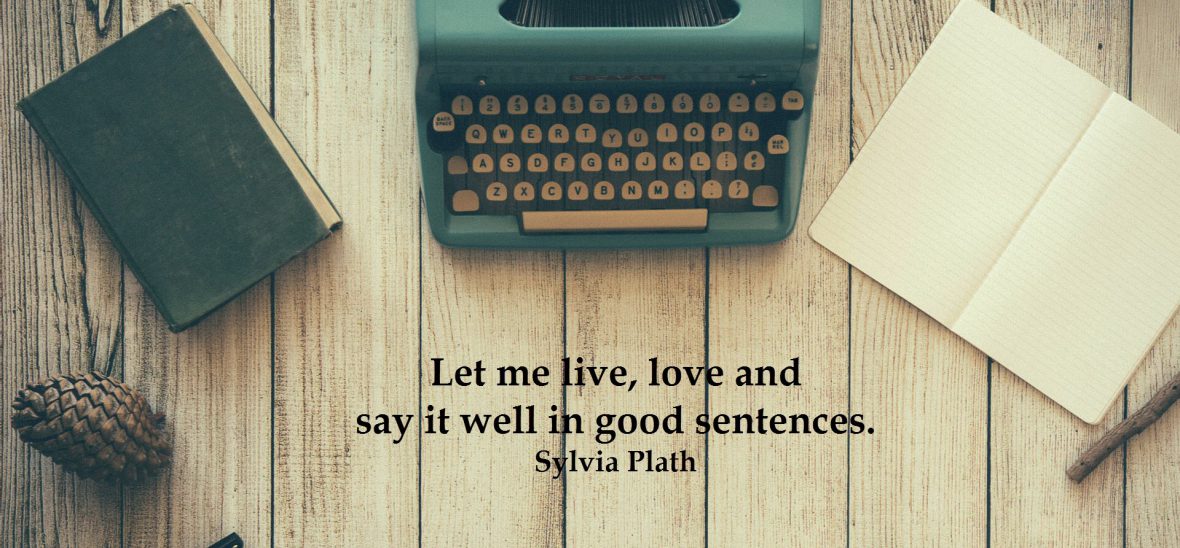
If my image is ever painted posthumously, I hope there is a pen in my hand.
Filling Your Own Cup
Every workday, a colleague and I walk around the large parking lot on our morning and afternoon breaks. If the weather is unpleasant, we walk the pedestrian pathway in the plant attached to our office area. Interrupting the workday with a little exercise and usually fresh air has become a beneficial routine for me. It energizes my body and mind to return to my tasks after the 15 minutes away. Today, my coworker admitted she sometimes feels guilty for taking our walking breaks, knowing the work that could be continued or completed during that time. As I have never felt this way about our breaks (though certainly I’ve skipped them on occasion to get through a project), my reply to her was, “I don’t think anyone should ever feel guilty for taking care of themselves.”
We sit on our rears for 8+ hours a day, giving our contribution to the productivity and profits of the company. Many in my department work through lunch, eating at their desks or not eating at all. The idea that we ought to feel badly about taking 15 minutes in the morning and the afternoon to refresh ourselves is absurd to me. But the American office’s expectations is not the topic at hand.
What I realized after I made that statement to my colleague was that outside of taking those walking breaks, I do not follow my own advice! At least once a day, sometimes more, I feel guilty for exactly that reason.
I am terrible at allowing myself to take care of me. Now some of it is laziness, absolutely. A lot of it though, is guilt. I get filled with unnecessary guilt, convinced that if I do these things for my physical and mental well being, I will slip below my standards as a wife and mother. Yet when I neglect these matters, I have less energy and clarity. I lose my patience more easily. I feel ugly and uncomfortable in my own skin, disappointed in myself. Obviously, tending to these simple needs of mine is integral to being the wife and mother I try to be!
Such a simple truth, by no means original to my brain, and terribly hard to learn.
Because the Saints Said So: He Is a Beautiful God, Is He Not? (St. Paul of the Cross)
When you are walking alone, listen to the sermon preached to you by the flowers, the trees, the shrubs, the sky, the sun and the whole world. Notice how they preach to you a sermon full of love, of praise of God, and how they invite you to proclaim the greatness of the one who has given them being.St. Paul of the Cross
The other night I had an argument with my husband. By the end of it, I lashed out in anger and frustration over something – something that had nothing to do with what had started the argument. Basically, I’d given him my worst version of myself in the heat of that moment. Afterward, I didn’t want to face it. I didn’t want to look myself in the eye or try to repair the damage with an apology. When I finished putting the kids to bed, I told my beloved I was going out, that I needed to get away for a little while.
I didn’t know where I was headed or what I thought I’d accomplish in this. All I was doing was running away from some ugliness. Human ugliness. I’m not sure why I did it, but as I grabbed my purse and keys, I also grabbed my camera.
As I drove away from our home, my attention was grabbed by the sky. After-the-storm, weighty clouds were hanging low against the streaks of pink, orange, and blue of the sunset. As that expanse of beauty hit my eyes, tears came. Only a few; a physical reaction to the tension between what was on display in the sky above me and what was on display in my heart that evening. I sped down the county roads to an area full of farm fields where I knew there would be horses grazing in the twilight. I climbed out of my car and snapped picture after picture, swallowing the lump in my throat with each click of the camera. I knew I couldn’t really capture it all but I had the compelling need to try.
This is what happens when something ugly collides with something beautiful. This is what happens when the fallen soul meets God. For God is beautiful and we were designed to need, to ache for, that beauty.
Every single piece of beauty in this otherwise ugly world comes from Him. “Every good and perfect gift,” as St. James puts it (James 1:17). Because the beauty has God as its source, it is always more powerful than the ugliness.
Is there anything more beautiful than the moments when we let it in? When we look upon the 27th sunset of the month and suddenly halt in awe at the sight; when the field full of dandelions transforms before our eyes from an acre of weeds to an acre of golden flowers; when the sound of the rain ceases to be a reminder of the mud that will follow and becomes a symphony of divine sustenance played for our planet. Those are the moments that get me through. Those are the moments when I know, I know, there is beauty in me. For I am made in the image of this beautiful God, and so are you, my friend.
We Are Afraid of Ourselves
Why are we terrified to admit to who we are? I do not mean your flaws or sins. I mean WHO YOU ARE. Why do we as human beings recoil at any claim of our inherent worth? We hear someone declare that human life is sacred, or that we are made in the image of God, or that the human person possesses an inalienable dignity that only a human can possess, and we balk. Downplay it. Avoid the topic. Point out all that is darkness so that we do not have to face the light that exists in us. Why are we afraid of who we are?
Events of recent weeks, headlines and online chatter, have me contemplating a long loved quote of the great St. Augustine:
“Men go abroad to wonder at the heights of mountains, at the huge waves of the sea, at the long courses of the rivers, at the vast compass of the ocean, at the circular motions of the stars, and they pass by themselves without wondering.”
I have a few ideas of why we are afraid to look with rightful wonder upon ourselves and our neighbor:
1. Acceptance of who we truly are would require us to raise our standards by about a mile. My chosen behaviors, the actions of others, the circumstances we settle for, the lies we tell ourselves to be more comfortable in this world: they would all be knocked down by the standard to which the human person, in all his greatness, deserves to be held.
2. We could not look upon the evil humans can and do commit with either indifference or tolerance.
3. Acknowledging the truth about ourselves leads to acknowledging the truth about every single other human person. The couple in the house next door; the terrorist; the kid who comes to your door; the murderer in prison; the handicapped man bagging your groceries; the elderly woman no longer productive in society; the jerk behind you at the ball game; the unborn child; your spouse; your best friend; your worst enemy. The truth of who we are as human beings demands a radical change in our treatment of each other, no exceptions.
4. Belief in this truth opens the door to all the answers to life’s great questions. This seems like a welcome treasure to gain, but I believe that actually having those answers is a frightening prospect for must of us because having them would require us to do something about them.
This quote from Marianne Williamson is one I’ve come back to again and again for personal inspiration. You have probably encountered it before. Read it slowly and maybe twice.
“Our deepest fear is not that we are inadequate. Our deepest fear is that we are powerful beyond measure. It is our light, not our darkness that most frightens us. We ask ourselves, ‘Who am I to be brilliant, gorgeous, talented, fabulous?’ Actually, who are you not to be? You are a child of God. Your playing small does not serve the world. There is nothing enlightened about shrinking so that other people won’t feel insecure around you. We are all meant to shine, as children do. We were born to make manifest the glory of God that is within us. It’s not just in some of us; it’s in everyone. And as we let our own light shine, we unconsciously give other people permission to do the same. As we are liberated from our own fear, our presence automatically liberates others.”
Even well-meaning Christians hesitate over the truth of the inherent worth of every human person. They settle into the idea (the more comfortable idea) that any worth and dignity they possess is only because they have Christ living in them. They decide to believe the theologically unsound notion that if Christ did not live in them, they would be worthless. This is not true. Even if Christ does not live in you, you are infinitely valuable. Let me repeat that. Even if Christ does not live in you, you are infinitely valuable. That is why Jesus came! If it were not true, you would not mean enough to God for Him to send Jesus to die for you!
You are not worth everything because Jesus died for you. Jesus died for you because you are worth everything! If Christians want a leg to stand on in evangelization, we cannot treat anyone as less than what they are.
This belief in the dignity of every unique person does not give rise to the lie that is modern tolerance. “I’m ok, you’re ok” is not the message here. Nor does it mean that everything else is meaningless. Who you are as a human being infuses meaning into all of your time, all of your encounters, and all of your endeavors. And like I mentioned already, it raises the standard for what is ‘ok’ tremendously higher than where we tend to place it on a daily basis.
The true nature of your personhood and that of the person you encounter next today means that you and the other are worthy of love and nothing less. Authentic love is desiring the good of the person (yourself and others) and then doing something about it. If we hold each of our behaviors, attitudes, and words under the spotlight of that definition, how much authentic love would we find?
I beg you as I beg myself, stop being afraid of your own worth.
Because the Saints Said So: Manifesting the Truth (St. Thomas Aquinas)
“As a matter of honor, one man owes it to another to manifest the truth.”
We have a duty of honor to manifest the truth to others! By words, actions, proclamations, stories, lifestyles, choices, reactions, attitudes – the list can go on and on. Because there are so many ways to manifest the truth, perhaps we could consider that doing it well is an essential part of that duty.
It is natural, when you are certain of a truth and that truth has done something remarkable for you, to desire to share it with others. It is natural and it is good. Sometimes, in our eagerness or confidence though, we can be unfortunately misguided in our methods. Great intentions but terrible form. I’d wager we have all experienced this, both as the truth teller and as the recipient.
Do not hesitate to manifest the truth, my friends, but be sure to tailor your approach to the circumstances. Consider the audience. Consider your relationship with them. Consider their situation. What in their life could make them receptive to what you are sharing, or make them resistant? What do they know of you that would cause them to trust what you are illustrating? St. Francis Xavier wisely noted, “The better friends you are, the straighter you can talk, but when you are only on nodding terms, be slow to scold.” If what you are sharing contradicts what they have previously believed or how they have behaved, are you standing on fertile ground that is ready to welcome the seed of truth you are offering? Or are you coming at them with your proverbial finger pointed and a glint of pride in your eye?
One of the most important precursors to sharing the truth, whatever bit of truth it might be, is a humble recognition of your own need for that truth. “If we say we have no sin, we deceive ourselves, and the truth is not in us (1 John 1:8).” If I say I am better than another person because I possess the truth, I am wrong. If I say I am better than the person I was before knowing that truth, I am on the right track.
In knowing our own need, we know why others need us to manifest the truth. If we truly “owe” our brothers and sisters the truth, as St. Thomas states, there must be a reason! Why do each of us need the truth? Because we are created by God, in the image of God, for eternal life with God. What I am trying to say is, intentions matter. If I am speaking the truth to another, it is not out of pride or judgment. I speak it because I hope they can know the love that I have experienced, and the joy, the strength, and the adventure that comes of knowing Him who is Truth. I speak it because I not only long to live my eternity in Heaven, but I long to have you there with me. If my intentions in manifesting the truth fall short of this (which they so often do), I do not stop trying to manifest the truth but I do keep purifying those intentions.
From our humility in accepting the truth for ourselves, comes change. Our lives must back up what we might say to another about the truth. When this is true, “saying” can become unnecessary in certain cases. The living speaks for itself and attracts others to the truth. No one expresses it better than St. John, I guess, for I go to him again: “Little children, let us not love in word or talk but in deed and in truth (1 John 3:18).”