Because the Saints Said So, Catholicism, Faith, Holiness, Jesus, Saints, Scripture

Because the Saints Said So: Manifesting the Truth (St. Thomas Aquinas)

Speaking the truth is not the same as living truthfully. They ought to go hand in hand, without a doubt, but they are not one single matter. Why is this matter on my mind today? Because of this weighty declaration by St. Thomas Aquinas, one of the greatest minds in the history of Christianity:

“As a matter of honor, one man owes it to another to manifest the truth.”

When I hear “manifest,” I think of something being revealed and made known in a way that the recipient has not experienced before. It is a tangible illustration. And when I hear “the truth,” my mind goes straight to Jesus. Surely though, the truth refers to every facet of God’s revelation though – from Natural Law to the words of Sacred Scripture to the daily applications of Christian morality.

We have a duty of honor to manifest the truth to others! By words, actions, proclamations, stories, lifestyles, choices, reactions, attitudes – the list can go on and on. Because there are so many ways to manifest the truth, perhaps we could consider that doing it well is an essential part of that duty.

It is natural, when you are certain of a truth and that truth has done something remarkable for you, to desire to share it with others. It is natural and it is good. Sometimes, in our eagerness or confidence though, we can be unfortunately misguided in our methods. Great intentions but terrible form. I’d wager we have all experienced this, both as the truth teller and as the recipient.

Do not hesitate to manifest the truth, my friends, but be sure to tailor your approach to the circumstances. Consider the audience. Consider your relationship with them. Consider their situation. What in their life could make them receptive to what you are sharing, or make them resistant? What do they know of you that would cause them to trust what you are illustrating? St. Francis Xavier wisely noted, “The better friends you are, the straighter you can talk, but when you are only on nodding terms, be slow to scold.” If what you are sharing contradicts what they have previously believed or how they have behaved, are you standing on fertile ground that is ready to welcome the seed of truth you are offering? Or are you coming at them with your proverbial finger pointed and a glint of pride in your eye?

One of the most important precursors to sharing the truth, whatever bit of truth it might be, is a humble recognition of your own need for that truth. “If we say we have no sin, we deceive ourselves, and the truth is not in us (1 John 1:8).” If I say I am better than another person because I possess the truth, I am wrong. If I say I am better than the person I was before knowing that truth, I am on the right track.

In knowing our own need, we know why others need us to manifest the truth. If we truly “owe” our brothers and sisters the truth, as St. Thomas states, there must be a reason! Why do each of us need the truth? Because we are created by God, in the image of God, for eternal life with God. What I am trying to say is, intentions matter. If I am speaking the truth to another, it is not out of pride or judgment. I speak it because I hope they can know the love that I have experienced, and the joy, the strength, and the adventure that comes of knowing Him who is Truth. I speak it because I not only long to live my eternity in Heaven, but I long to have you there with me. If my intentions in manifesting the truth fall short of this (which they so often do), I do not stop trying to manifest the truth but I do keep purifying those intentions.

From our humility in accepting the truth for ourselves, comes change. Our lives must back up what we might say to another about the truth. When this is true, “saying” can become unnecessary in certain cases. The living speaks for itself and attracts others to the truth. No one expresses it better than St. John, I guess, for I go to him again: “Little children, let us not love in word or talk but in deed and in truth (1 John 3:18).”

I write this as one who needs to hear it. As one who must pray from the soul, “Send out your light and your truth; let them lead me; let them bring me to your holy hill and to your dwelling (Psalm 43:3)!” And my prayer goes on, “Make me a beam of that light of your truth.”

Because the Saints Said So, Catholicism, Faith, Holiness, Saints, Scripture

Because the Saints Said So: On Sadness and the Spirit (St. Pio)

In the past few years, the saint whose words and stories have resonated with me the most is St. Pio of Pietrelcina. An Italian farmboy born in 1887; a world renowned miracle worker known for his humility, integrity, and simple wisdom by the time he died in 1968. There are plenty of biographical details worth examining from his life but that is not the purpose of this post.

Numerous statements by St. Pio have I read, considered, prayed over, and taken to heart. Most recently, the one that is staying with me is this: “Don’t allow sadness to dwell in your soul, for sadness prevents the Holy Spirit from acting freely.”

My first response was, “Well, that’s just too much to ask!” But I stared a little longer at the words. I wondered if it was a matter of refusing to be sad about anything. That seemed unnatural and impossible. Was it about not letting the sadness reach your soul then? That could be debated, I suppose, but I still believed I hadn’t hit the nail on the head. True sadness does reach the soul. That’s the nature of the beast. So what then was St. Pio challenging me to do?

Eventually my eyes lingered on one word: dwell. Don’t allow sadness to dwell.

Dwell: verb: 1. to live or stay as a permanent resident; reside; 2. to live or continue in a given condition or state

Don’t let sadness be a resident. Allow sadness to be a visitor. Treat it as such. Visitors require attention. Meet the needs of the visitor of sadness. Ignoring it is not appropriate. Visitors (hopefully) come for a reason. They are present but they are expected to depart. Visitors are not permanent residents.

St. Pio is not demanding the impossible. Nor is he saying anything that wasn’t already indicated long ago in Scripture by Jesus and his apostles.

So you also are now in anguish. But I will see you again, and your hearts will rejoice, and no one will take your joy away from you (John 16:22).

Blessed are they who mourn, for they will be comforted (Matthew 5:4). 

I consider that the sufferings of this present time are as nothing compared with the glory to be revealed for us (Romans 8:18). 

Blessed be the God and Father of our Lord Jesus Christ, who in his great mercy gave us a new birth to a living hope through the resurrection of Jesus Christ from the dead, to an inheritance that is imperishable, undefiled, and unfading, kept in heaven for you who by the power of God are safeguarded through faith, to a salvation that is ready to be revealed in the final time. In this you rejoice, although now for a little while you may have to suffer through various trials, so that the genuineness of your faith, more precious than gold that is perishable even though tested by fire, may prove to be for praise, glory, and honor at the revelation of Jesus Christ (1 Peter 1:3-7, emphasis added).

They and St. Pio challenge us to give sadness its proper due but nothing more.

What should you allow to “dwell in your soul?” Well, St. Pio touches on that, too. The rightful resident of your soul is the Holy Spirit, and therefore the gifts and fruits of the Holy Spirit.

Do you not know that you are the temple of God, and that the Spirit of God dwells in you (1 Corinthians 3:16)?

Gifts;
The spirit of the Lord shall rest upon him: a spirit of wisdom and of understanding, a spirit of counsel and of strength [fortitude], a spirit of knowledge and of fear of the Lord, and his delight shall be the fear of the Lord [piety] (Isaiah 11:2-3a, emphasis & notes added).

Fruits:
In contrast, the fruit of the Spirit is love, joy, peace, patience, kindness, generosity, faithfulness, gentleness, self-control. Against such there is no law (Galatians 5:22-23, emphasis added).

When visitors like sadness are allowed to act as residents, the life and work of the Holy Spirit is fettered and obstructed. Luggage blocking the hallways where the Spirit should move freely. In the case of sadness, it is the fruit of joy that is most inhibited. However if joy is a resident of your soul while sadness, caused by any number of things, is only given a visitor’s pass, you will not lose your joy.

Joy is not merely a higher degree of happiness. It is different than happiness. Joy is rooted in hope, particularly the hope of salvation. As its roots then link it to eternity, Joy is not eroded by the changing tides of circumstances the way that happiness can be. Certainly circumstances can affect our joy, strengthening or weakening our awareness of joy or our ability to choose joy in our reactions to things. Circumstances cannot steal authentic joy though. That is among its key differences from happiness.

It is wrong to say that a Christian should never be sad. It is right to say that a Christian does not allow sadness to be a resident of the soul.

Faith, Jesus, Scripture

On the Water

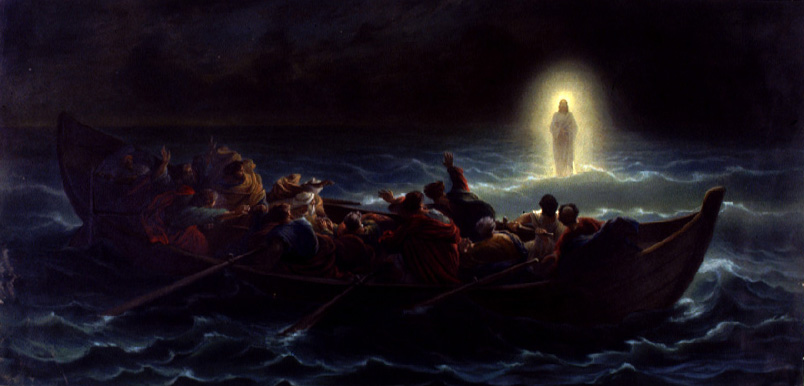
Then he made his disciples get into the boat and precede him to the other side toward Bethsaida, while he dismissed the crowd. And when he had taken leave of them, he went off to the mountain to pray.

When it was evening, the boat was far out on the sea and he was alone on the shore. Then he saw that they were tossed about while rowing, for the wind was against them. About the fourth watch of the night, he came toward them walking on the sea. He meant to pass by them.

But when they saw him walking on the sea, they thought it was a ghost and cried out. They had all seen him and were terrified. But at once he spoke with them, “Take courage, it is I, do not be afraid!” He got into the boat with them and the wind died down. They were completely astounded. 

They had not understood the incident of the loaves. On the contrary, their hearts were hardened.     Mark 6:45-52

I am much more familiar with Matthew’s account of Jesus walking on the water than I am with Mark’s. The number of words and actions that stood out to me upon my recent reading of this passage tells me that anytime I’ve studied this particular story of Jesus, I made use of only Matthew’s account.

Right out of the gate, I note that Jesus made his disciples go in the boat and leave him behind. It gives the impression that they didn’t want to leave, didn’t wish to be separated from him. They had just witnessed the miraculous feeding of the five thousand. They were likely amazed, but confused, and had questions for Jesus. I would guess they were looking forward to some time spent with Jesus without the crowd so the twelve of them could ask those questions and mull over what had happened. Instead, Jesus tells them to take the boat to the other side of the sea and leave him behind.

On their way they encounter high winds and waves. It is stressful, exhausting, and possibly frightening. And Jesus is not with them. They don’t know he’s watching them from the shore. They don’t know he is seeing their travail.

Then Jesus takes to the water. He begins walking across the sea. Easily could we think “He’s going to them.” Jesus must be walking to his disciples, his closest companions, friends, and followers. He sees their hardship and He is going to them. Thus my surprise when I read “He meant to pass by them.” What?! This is the line that baffled me when I read this passage recently. It’s been on my mind for at least a week. “He meant to pass by them.” He was simply going to walk by them and leave them to the storm? He wasn’t going to help? He wasn’t going to get into the boat with them and calm the wind? Really, Jesus? Why?

It took until today, thinking on this yet again, to change my tune. “He meant to pass by them.” As in, He meant to get close enough for them to see Him. Close enough for them to call to Him, to ask Him to help. Yes. That is what Jesus meant to do. Instead of keeping His distance, waiting out the storm, or even helping from afar – instead of this, He would draw near. He would help them in the midst of their trouble. He would make Himself personally available to them.

I’m not claiming this is the only possible interpretation of this moment in the Gospel. As far as what the disciples themselves realized about Jesus in that experience, I can’t speak to that either. I am simply speaking as a person of faith reading this passage yet again and considering the manner in which our Lord sometimes chooses to help His beloved ones. We might want Jesus to stay with us in the particular manner we prefer, but He says no, you must go forward in the way I’m instructing you. We may want Him to appear in our midst, in our struggles, and take over the helm of the ship. He instead draws near and waits for us to recognize Him and call to Him.

God’s help, His saving grace and guiding hand, often come in surprising ways. He’s apt to choose the less obvious, the less understandable manner of meeting us on our wind tossed boats. And in every instance He commands, “Do not be afraid!” Do not fear! Trust in me! Know that I am here, that I, the Lord of Heaven and Earth, am available to you. I am here. Be not afraid.

Faith, Gratitude

Home Is a Moving Object

Time has an insatiable appetite, hording each present moment into its collection known as the past. Except even its ownership of all those moments doesn’t satisfy. No, time must be sure we can’t recollect what was ours. So it chips away at things, induces change, until the circumstances that made our memories are hardly recognizable. This is the conclusion I came to as I drove away from my hometown a few weeks ago. The building blocks of that structure, the “home” of that place, are gradually coming apart. Not crumbling or breaking, nothing so tragic as that. It’s all the ordinary process of time passing, that’s all. Blocks are removed, reshaped, separated from the rest. We all experience it. People move, people die, businesses close, buildings are remodeled, roads are rerouted. Essentially, time happens. What can we do about it?

Maybe the better question is what should we do about it? Because we can cling to the past. We can reconnect with as many old friends and acquaintances as we can find. We can dwell on what we no longer have. We can focus on memories until we are certain all was better then than now. But should we?

As I drove the two hours back to my present home after a weekend at my former home, my babies sleeping in their car seats and the radio giving a soundtrack to my thoughts, I let myself ponder all this. My conclusion: home is a traveling vehicle. It carries us, holds and contains us, and most of all, it moves with us. The old adage of “home is where the heart is” may be one of the most well known cliches of all time but that doesn’t make it false.

We moved to our current home 5 1/2 months ago. I know exactly how long we’ve been here because it is the same as my little daughter’s age, minus a week. We moved in a state of upheaval. Baby Girl spent one single night in our home in Menasha. We returned from the hospital and rested in a rocking chair while every other piece of furniture, article of clothing, and cooking utensil was packed up and hauled out. Then my husband began his new job, sleeping at the worst motel in our new town, and the kids and I had a limbo week at my parents’ house while we waited for our place to be move-in ready. We unloaded all those boxes in Manitowoc and we were home. In the weeks and months that followed I have answered the “does it feel like home yet?” question countless times. I realize now that I’ve been answering incorrectly. I usually talked about what still needs to be done to settle in. I described where we were at in the stages of unpacking and decorating. I spoke of feeling like a stranger at our new church or how I don’t have friends yet, stopping short of admitting just how lonely I am. I mentioned my gradual familiarity of the city’s layout and what stores or restaurants or parks we’ve tried out. None of that answers the question though.

If I answered with clarity I’d say simply, “Yes.” Yes, it feels like home. Just as our duplex in Menasha felt like home, or our apartment in Appleton after the wedding, or the apartment and then house I shared with my sister and friend in the years before being married, it feels like home. Because it is where I live. Not where I used to live or wish I lived or where my extended family or various friends live, but where I live now. It is where my life is happening. Home is a moving object. If I understand what makes a place or situation “home” then I can be sure to never leave it behind or have it taken from me. It will move and change with me, surround me at all times. It will be the scene of my life being lived, and that alone will give it the privilege of being called home.

Faith, Pro Life

I Am Not Shocked

I have said little about the undercover investigative videos revealing the practices of Planned Parenthood in the harvesting and selling of organs and tissues from aborted babies. I have said too little. I have read and heard plenty. Articles, blog posts, response videos, rants, prayers, questions, arguments. But I have said little. I have held back because it has been incredibly difficult to find my words in this instance. That’s not a common trouble for me. This time though, the words… well, they’re here now and they are this: I am not shocked.

When the doctor in the first video drank red wine and munched on salad during the pauses in her conversation about the techniques that help preserve the wanted organs as the child is killed, I was not shocked. When the second video dripped with the woman’s cold greed as she laughed over her dream of a Lamborghini from the profits of their sales, I was not shocked. When the third video was released and this time the investigative journalist was actually in the room while they are sorting parts of the baby and speaking in even greater detail of the commonplace practices, I was not shocked.

Now there is a fourth video. I can’t watch it. I can’t stomach it. But I have read a thorough description of it. The doctor pointing out the organs to be harvested. The assisting tech exclaiming that it was a boy. The mentioning of how they handle the situation (i.e. still carry out the killing & harvesting) when the baby is delivered before they can perform their procedure (i.e. born alive before the abortion can be completed). On and on. And still, I am not shocked.

Disgusted, heartbroken, sad, angry – all these things and more, yes, but not shocked.

I have wept. I have shook my head, hung my chin against my chest, and cried. My tears have fallen for these precious, precious children. I’ve cried for the mothers and fathers, the “doctors” and their assisting employees. I have ached for the pain of those who chose an abortion in the past, been involved in an abortion in the past in any way, have suffered over their decisions and actions and sought forgiveness, have tried to move on from it but now the viral videos force them to acknowledge once again and maybe to a new, gut wrenching degree what their choices meant. I have cried so many tears for them all in recent weeks.

After the third video was released, I was sitting on my couch reading one writer’s thoughts on it and tears ran down my cheeks. My baby girl was asleep against my chest. Her dear heart beating up against my own. My toddler was playing on the floor a few feet from me. Intuitively – yes, intuitively after only 22 months outside my womb – my boy looked up, examined my face, and climbed into my lap to wrap his arms around my neck. I held him for a moment, willing myself to hold it together until he went back to his toys so that he would not feel my body shake with grief for all the embraces lost through abortion.

So why am I not shocked? They’re called shock videos, and for many that is exactly what they accomplish. But for me, the atrocities being revealed are, dare I say, logical. They are reasonable realities. I feel like screaming it from a roof top or a street corner or better yet, a church steeple as the every Sunday crowd marches in. “WHAT ELSE DID YOU EXPECT? HOW COULD YOU EXPECT ANYTHING LESS THAN THIS?”

For more than 40 years we have legally been killing defenseless children. Legally. Condoned by the law. Labeled as a human right. The baby has been called a blob of tissue. Not a baby. Not viable. Part of the mother. As scientific developments have actually contradicted every “scientific” argument for the acceptability of abortion, science has been abandoned. We have moved on to rights. The right to choose. We fill women’s heads with all they will have to sacrifice if they become mothers. All that they will miss out on. We tell them to choose what is best for them. Choose. Choose. Choose. Say it enough times and it can suddenly stand alone. No need to state what is being chosen: to end a human life. How dare we question the obvious fact that that woman has a right to choose whether or not to have that baby? We cower behind the “I wouldn’t do it but who am I to tell someone else not to do it” defense. But that baby. That baby doesn’t have a right to choose. That baby is dependent on the provision and care of the mother, no different than after that baby is born really and for a good long while beyond that. Let’s not go there though. Then the platform would collapse. Let’s just focus on the woman. Yes, let’s focus on the woman! Or the man. The parents. For that is what they are. Many realize that before the abortion but still make that choice for a myriad of reasons. Even more women and men realize their parenthood after the abortion. Depression, anxiety, suicide, self-mutilation, self-hatred, broken relationships. Decade after decade of the aftermath of abortions swept under the rug. Kept out of the limelight. Off of the mainstream news channels. Decades of protests, marches, gatherings. Every single year a peaceful, massive march through our nation’s capitol. Grown to as big as 650,000 individuals from all religions, all ages, all states and numerous countries. A march this size, over half a million people, if it was concerned with literally any other law on the books, would be one of the biggest news stories for days or even weeks across the land. But a march this size to protest abortion? Nah. Maybe it’ll be mentioned, maybe not. Some quick shots of the protesters and some creative camera work that implies the few handfuls of pro-abortion protesters that show up are actually of nearly equal numbers. Empty chairs and presidential excuses when the Planned Parenthood executives are called upon to explain themselves. Decades, years, months, weeks, days of procedures. Such a clean, clinical term: procedure. So much nicer than “death.”

Death. We have characterized our era as one of death. Death that is perceived as acceptable, excusable, even desirable. Death of the most vulnerable, the most incapable of choosing for themselves, the most dependent on their caregivers. That is us. Someday that is what we will be most remembered for in the history books.

So, no, I am not shocked. We asked for this. We walked straight into this hell on earth. Eyes open. Hands idle. Steady pace. Why would we expect anything else than what we see in those videos?

Please do not mistake my words for hopelessness. As long as there is a single person on this earth speaking for the babies, there is hope. Our country is at a crossroads. A fork in the road. A point of decision. If we do not take a hard turn away from the direction we have been going, we will continue in that direction. Plain and simple. The progress will be logical and reasonable, just as it has been so far. The killing of unwanted children after birth will become acceptable. The choice to end the life of a handicap or ill child because of the difficulty/burden/pain/etc. he or she causes the parents will become legal. An ultrasound tech gets the gender wrong and the baby born is not the sex the parents wanted? Kill it. There is a genetic predisposition toward one disease or another, in the name of mercy then, just in case, kill the child before he or she might endure the disease.

Don’t shake this off as absurd. Don’t assume it could never happen. Do you think that when the Supreme Court decided that “ending a pregnancy” was a right that must be upheld by law that anyone in this country really expected all the results that came of this? Did anyone expect the numbers to reach 50 million? Did anyone expect so many parents to end their children’s lives based on the mere chance they might have Down’s Syndrome or a genetic disease? Did anyone expect the abortion industry to become so profitable? Or become partially funded by our own tax dollars? Did anyone expect the destructive aftermath for the women and men who regretted their abortions? No. I don’t think anyone did. Or at least not more than a few. There must have been a few or the March for Life would not have been introduced the very next year. There was hope then and there is hope now.

I remember explaining to a group of teens a few years ago my stance on the effort to reverse the Supreme Court decision. I tried to explain that in the end, it wouldn’t matter whether or not the law changed. Laws do not determine what is right or wrong. If something is right or wrong it remains right or wrong no matter what a law says about it. It is hearts that must be changed. Every heart that firmly believes abortion is not evil; every heart that refuses to take a good look at the issue or admit it matters; every heart that is on the fence and ready to be swayed in one direction or the other; every heart that fears speaking the truth. The hearts are where the change must happen. Laws ought to follow suit then, but at that point, would it matter? If the hearts are changed there is no one left choosing abortion. No one keeping those clinics open and profitable. The law would become irrelevant if still unchanged. Hope lives in changing hearts.

It is time we start expecting the consequences of our choices. It is time we had the foresight to know what is the next and the next and the next logical step if we continue down the same path. We must open our clouded eyes and together turn off this road. Find a new road. Choose to end the pattern. Admit we were wrong and begin to make it right. We can do it. We must do it. Continue to uncover the gruesome details and get people to face them. Continue opening and supporting pregnancy centers that welcome and assist mothers in need. Continue to stand peacefully outside the clinics, ready to speak knowledgeably and kindly with any person who needs to hear from you there. Continue to advocate for adoption and reasonable adoption laws. Continue to argue lovingly but firmly with anyone willing to converse with you on the subject. Continue to pray if you are a praying individual. And if you cannot continue because you never began taking any of these or other steps to help fight against abortion, then begin now.

We must create a world where abortion becomes shocking again. Imagine with me a future generation who has to learn from a teacher of this atrocious practice called abortion, who must look to history books to even know what it means, and are left wondering how it was ever legal. Imagine them thanking those who came before them for eliminating it. Imagine that world and make it the logical result of what we choose now.
Faith, Scripture

The Art of Waiting

I don’t consider myself an artist. That’s simply not a label I have ever used to describe who I am or what I do. The last five months and especially the last week though, have given me every opportunity to become an artist in a very specific genre: the art of waiting. Waiting on efforts to bear fruit, hopes to be fulfilled, plans to be successful, and prayers to be answered. These acts of waiting characterized my and my family’s days. I call them “acts” for waiting is not necessarily a passive thing. There’s a lot of effort to be put into waiting, or at least into waiting rightly. Waiting with hope; waiting with peace; waiting with intentionality. It’s hard. It is SO hard.

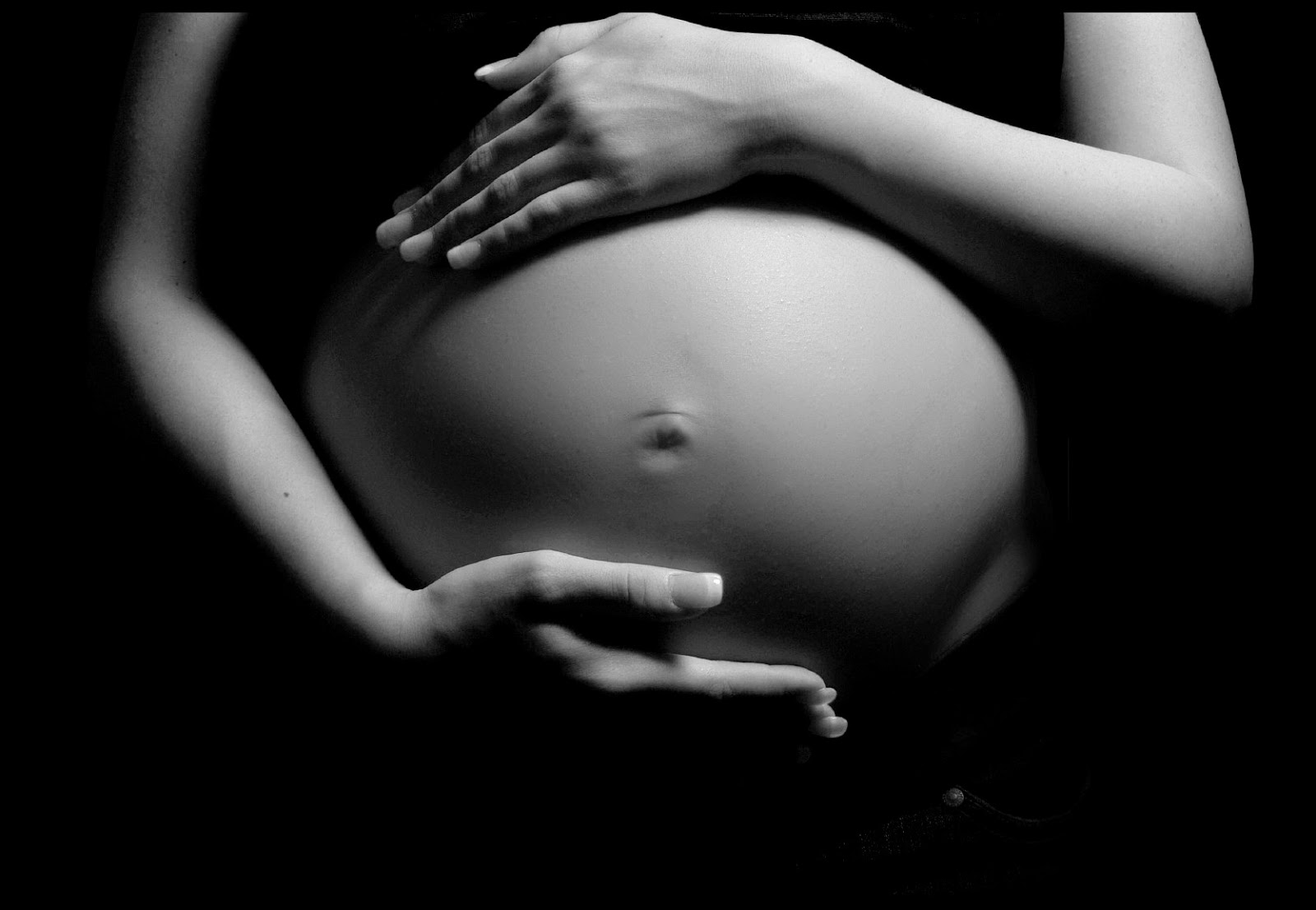
And now as the efforts and hopes of those five months are finally bringing about fruitful change, as we’re packing our home to move and preparing for my husband to start a new job, I find myself still wrapped up in the art of waiting. My unborn daughter is teasing me with days of early labor contractions, hanging out in there for longer than I or my doctor expected. I’m scheduled to be induced in two days and that scares me for some reason way beyond any nervousness I might feel about going into labor and delivering this baby any time now.

Just the same as all the days in those five months that I’m glad are wrapping up now, I can’t depend on much other than trust, prayers, and feeble attempts at patience. The art of waiting is centered on acknowledging that there is so little in my own control – and then believing that is perfectly okay.

“Be still and know that I am God.” (Ps 46:11)

“But do not ignore this one fact, beloved, that with the Lord one day is like a thousand years and a thousand years like one day. The Lord does not delay His promise, as some regard ‘delay,’ but He is patient with you, not wishing that any should perish but that all should come to repentance.” (2 Peter 3:8-9)

“Peace I leave with you, My peace I give to you; not as the world gives do I give it to you. Do not let your hearts be troubled or afraid.” (John 14:27)

Faith, Holiness, Jesus

Enduring Faith

Today, my friend came home. For the last three years he has been serving a prison sentence, unjustly in many people’s opinion – including mine.  This man… well, I could spend this entire post summing up the goodness of this man and the effect he had on me during our time of closer friendship. But that isn’t the purpose of this post. The purpose is to honor the way, during the last three years, he lived the Scripture, “Rejoice in hope, endure in affliction, persevere in prayer” (Romans 12:12).

I didn’t get an opportunity to visit Pete while he was in prison. I sent a handful of letters and cards and occasionally received a reply. The tone of those replies, the statements he made, added to the stories and descriptions I heard from his family and friends who did visit him, came as no surprise to me. They were true to Pete’s character. True to the young man I knew better years ago; true to the man I have always assumed he has continued to be since then. No, they did not surprise me, but that’s not to say they didn’t move me.

Smack dab in the middle of his doctorate studies, ongoing cancer research at his job, and plenty of other endeavors and activities, Pete was punished for circumstances outside his control. He had reason to despair. He had reason to wallow and slip into depression. He had reason for anger. Yet, beyond a reasonable level of righteous anger, he indulged in none of these things. I’m not saying he didn’t have to struggle against them. I don’t know if there were days when they tried to sneak into his heart and fill him with discouraged resignation. I do know that he did not allow them to take over.

Throughout the three years, Pete remained a man of hope. He remained a man of patience. He remained, above all, a man of faith. We are exhorted again and again in Scripture to endure trials and tribulations with the attitude of Christ. We are called upon to take up our crosses and carry them in the path of our Lord. In the Gospels, Jesus does not assure us that we will see justice prevail this side of Heaven. He does not promise to relieve from our lives the suffering that comes our way. Throughout the rest of the New Testament, the Apostles reinforce these realities of life in Christ.

We are assured instead that there will be crosses and trials. We are told flat out that “in the world [we] will have trouble” (John 16:33). The promised reward is only received in full when this life has finished. The justice is meted out according to God’s terms and timing, not ours. The relief from the suffering is not guaranteed until Paradise.

So many of us know these truths. We’ve heard them, read them, attempted to be accepting of them. In the moment though – the moment of darkness and pain – do we hold fast to them? There is no easiness in this aspect of the Christian life. It is why the stories of the martyrs and saints are such effective buoys of inspiration. We need to know it’s possible. We need to celebrate the lives of those who emanate the attitude of Christ as they carry their crosses. In them we gain encouragement to do likewise.

This is what Pete gives to those who know him. Whether he ever realized it or not, each day that Pete chose faith, hope, and charity in his attitude, thoughts, and actions during the last three years, he allowed Christ to make use of him. He became an extension of the example set by Christ for us all.

Pete isn’t a superhero. He’s not something other than what we are. Which means, we are all capable of acting in God’s grace to live with the attitude of Christ. In every circumstance – joy and suffering – from the most ordinary to the most extreme. By the Spirit of Christ, we are transformed. Let us live transformed lives. Let us honor those among us doing so right now.