“I want to go home.”
“And I want to go to the moon. It ain’t happening, sweetheart. Time to accept that.”
Life, Faith, and Fiction: Everything is better in writing.
On the occasions I venture onto Pinterest, I tend to seek out four sorts of pins: fashionable outfit ideas, dinner and dessert recipes, workout guides, and writing prompts. I virtually pin each one on the assigned virtual board then continue on the virtual quest for more. I make use of the workout guides regularly. I try out the recipes here and there. I sometimes pick out a few fashionable ensembles to inspire me when I go clothes shopping. Rarely do I take time to use the writing prompts.
For months now, thoughts about my homeland have been crossing my mind. The events that take over the daily headlines have me contemplating America in what she used to be and what she has become. With these thoughts, mixed feelings are felt and levels of hope and despair fluctuate.
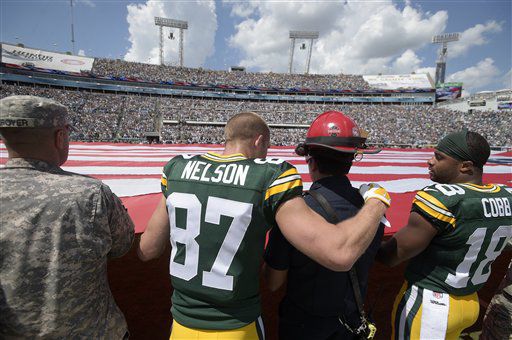
On Sunday, I watched a lot of football. Three times I stood in my living room as dozens of individuals stretched out a flag covering the entire square footage of the playing field. Three times I listened through a moment of silence for the 15th anniversary of the September 11th terrorist attacks followed by a performance of our national anthem. Three times I got choked up.
Only two times I felt embarrassed. When the feelings of silliness began to rise during the third occasion, they were sent packing with one simple thought: it’s okay to love my country.
I’ve noticed a tendency toward extremes in people’s statements on America lately. So much of it goes all the way back to our collective reaction to September 11th. That attack felt intensely personal even to those of us who did not know individuals lost that day. I remember the sensation of protectiveness, of “how dare you hurt what is mine!” A new era of patriotism was ushered in, justifiably and beneficially so at the time. The experience awakened in many of our hearts a hibernating bear of attachment to our country.
As is perhaps bound to happen though, the fierce plunge into patriotism was taken to an extreme by some. A refusal to hear a word against America and its culture; a disdain for most other nations and nationalities; a fear of anything that appeared outside the realm of what we now held so dear about our homeland. Then the last 10 years or so saw a whiplash reaction; a violent swing to the other end of the spectrum where a high regard for our nation is ridiculed as blind and foolish.
The extremes frustrate me. I see patriotism as a genuine love of home and country. Genuine love is unconditional but it is not naive. Maybe the extremes are rooted in a misunderstanding of unconditional love. To love someone unconditionally is to love them through anything and everything. Highs and lows, achievements and mistakes, rights and wrongs; love them through it all. Unconditional love is not dependent on the other person earning the love. It is dependent on the giver of love choosing to offer it no matter what. However – and this is an important ‘however’ – unconditional love is not a refusal to recognize flaws. It is not turning a blind eye to what needs to change in the beloved. It is loving them despite the existence of those flaws and seeking productive ways to help them make changes in their best interest.
The extremes aren’t authentic love. One is claiming that because you love your country, anyone who has anything to say against her be damned. The other is a refusal to love her so blindly but then just as blindly treating her as wholly unlovable. Neither are true patriotism.
It’s okay to be moved by the sight of soldiers, firemen, policemen, and athletes all holding a football field sized flag. It’s also okay to look at the political system with a critical eye. It’s okay to oppose a federal law that contradicts what you know to be morally good. It’s also okay to teach your children to be proud to be American.
It’s okay to love your country.
Read part one here.
When I got a good look at William after his return, I could see that the boy I knew was gone. There was no youth left in his face. He was still William though. A little sadder, perhaps, a little more tired, but still him. Tommy took to his father immediately. No fear or reserve. Carly had seen to it that the boy already loved William with all his innocent heart.
The wooden swing was used until it broke. By then Tommy was much taller and he pried the split piece of wood from its ropes and began to use those ropes to still swing as high as he could.
When Tommy was the perfect image of William when he first brought Carly to my field, Tommy brought a girl, too. A sweet, quiet girl with corkscrew curls and a wide eyed way about her. They visited me all summer long and I was content to watch it all happening again. In the last stretch of heat that summer, after the pair laid in each other’s arms on the dewy grass, talking, kissing, and dreaming, Tommy strode over to my trunk with a purpose in his step. He took something from his pocket; it was a small folded knife, and he used it to carve something into my bark. It stung a little but I am a large, strong tree and he only cut a tiny piece of me. His girl came up beside him and lifted her face for another kiss when he finished.
The next spring, Tommy returned and used that same knife to scrape away the carving he so carefully made. That hurt a little more, but no more than the sight of the tears he brushed away while working at it. I saw him less and less after that, and I have so often wondered where his road took him.
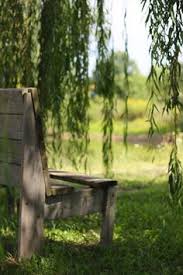
William and Carly grew old beneath my boughs. He built a bench on which they sat through countless sunsets. Year after year, they returned; peace on their faces and light in their eyes. They began to walk more slowly. I could see their approach at the far corner of the field and by the time they reached me and sat on their bench, the sun had shifted to another part of me.
It is spring again now. I expected them to come several sunsets ago, but they have not. There’s been no sign of my dear friends
Instead, there are machines. Not like the ones in another time that used to churn up the field in spring or harvest its grains in the autumn. These are different; rougher and louder. They have cleared and flattened the field. Trees that stood for all or most my life are gone from the other side of the meadow. New machines are coming each day now with loads of wood and other materials unknown to me. I am afraid. Their movements get closer and closer and I can only wonder if I will be in their way in the end.
The nearer they draw, the gladder I am to have told you the best of my memories.
Read part one here.
The one day I wished I could weep. It was autumn again. My browning leaves danced in a strong wind. The field was harvested and the sun was spending fewer hours in my sight.
Tommy sat upon the wooden board suspended from one of my thickest branches. An older man, white hair and a knowing face, came with them one day in the summer to string up the swing with two thick lengths of rope. Tommy called him Papa and was his shadow as the man worked. When I was holding the swing securely, Papa placed Tommy on it and showed him how to work his little legs to propel forward and back. It took some practice but soon Tommy could do it without aid. He’d reach the limits of the swing’s arc and stretch his toes out to tap my strands of leaves hanging in front of him.
That day, Tommy rode the swing while Carly laid on her back in the sunshine just outside my circle of shade. I saw her shiver a bit in the wind, wrapping her yellow sweater a little tighter around herself. She’d roll her head to the side to check on her boy then back toward the sun directly above her. Carly looked sad more and more in those days. She was quick to lift her pretty mouth into a smile when Tommy came to her. She did not know that I watched her face in between the smiles.
When she saw Tommy slowing the swing, scuffing his shoes on the grass beneath him, Carly announced it was time for lunch. She set about unpacking the basket they brought along but Tommy didn’t hop off the swing as I expected him to do when the food was in sight. His eyes were fixed on some distant spot along the edge of the field. Carly called to him twice before walking over to see what kept his attention. She turned to follow his gaze and he lifted an arm to point.
A figure was coming into view, a man. Slowly, slowly. I saw Carly’s mouth form a little circle; then a gasp and tears before the man was even close enough to see with any clarity. It didn’t matter; she knew. She knew and she ran. A sprint along that grassy path, one shoe slipping off with no notice from its wearer. By the time she reached him, I too could see that it was William. Our William. He was home.
Read part seven here.
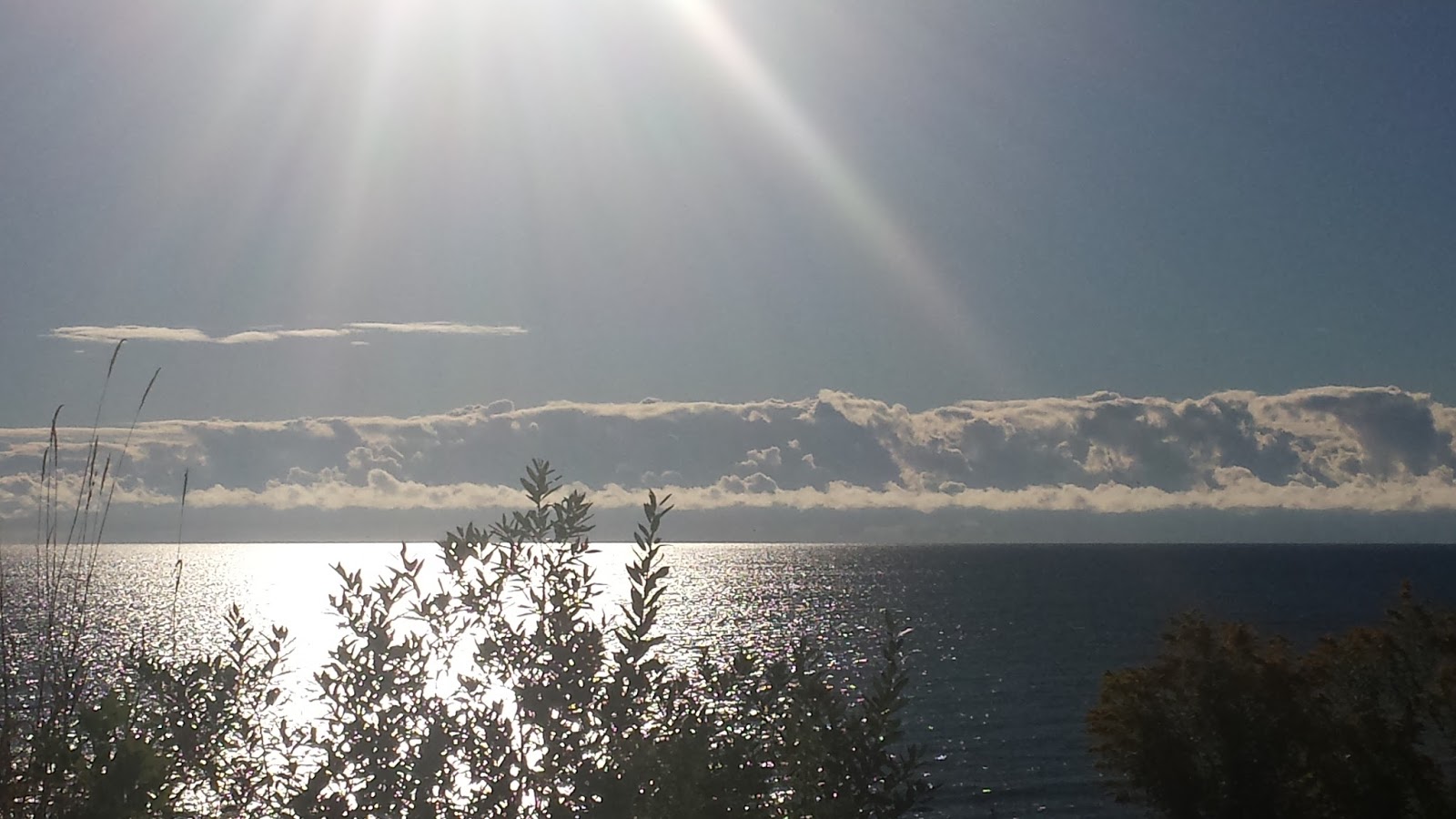
As far as this blog goes, I have been slacking terribly. As far as everything else though, I have not. August was a highly productive and enjoyable month.
![]() |
| September’s First Rays of Sunshine (photo taken in Cleveland, WI) |
Read part one here.
He learned to walk in the clearing between me and the creek. Carly brought him as she promised to do. Those first few cycles of the seasons, when I witnessed him transform from that round, sleepy bundle in her arms to a giggling baby scooting on his hands and knees, to this scrappy, ready-to-go boy, were the best of my years. Nothing could surpass the pleasure of it. I guarded his perfect face from the glare of the sun. I watched with anxious hope as he took his first steps then, in what seemed like no time at all, began to run and tumble over the bumps of the earth that surrounded me. I swung my boughs in the wind, inviting him to grab hold and lift his little feet from the ground.
I saw his father in his eyes and smile; heard his father in his laugh. His mother noticed it, too, of course. Bittersweet and beautiful, still waiting for William’s return, she would set down her papers and pen to watch him play. On picnic days, she talked of nothing but William while the new boy chewed his sandwiches and apples. Stories to make him smile, make him laugh, make him listen in wonder. Always when she finished came the question, “When will Daddy come home?” Always the same answer, whispered into her boy’s blonde curls as she hugged him, “Soon, my dear, soon.”
The new boy was Thomas William, as that was what Carly called out when he wandered from my side. The rest of the time though, he was Tommy.
Read part six here.